Kumano Kodo Nakahechi Route (UNESCO World Heritage) | A Beginner-Friendly 2-Day Hiking Itinerary from Takijiri-oji to Chikatsuyu (via Takahara Kumano Shrine)
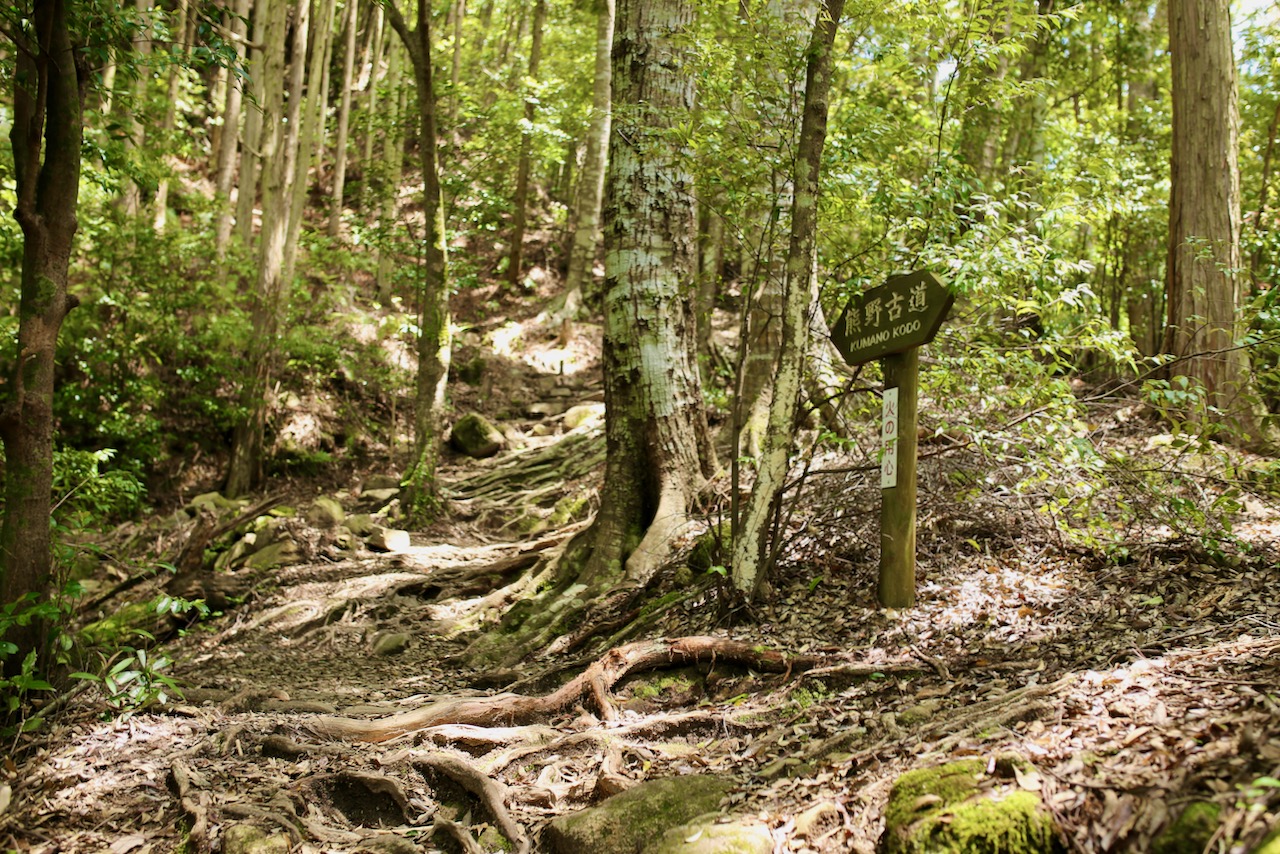
The Kumano Kodo is one of the world’s few UNESCO World Heritage pilgrimage routes. Known as the “Land of Revival,” it has welcomed pilgrims seeking spiritual renewal for over a thousand years. Yet many people hesitate to give it a try, unsure of where to start or how challenging it might be.
Takijiri, known as the gateway to the Kumano Kodo, is the perfect starting point for first-time hikers. As you follow the historic stone-paved path, the trail gradually leads you deep into the forest, where centuries of history and untouched nature blend to create a truly peaceful and spiritual atmosphere.
In this article, we’ll introduce a beginner-friendly 2-day, 1-night itinerary based around a stay in Takijiri. The main route covers the classic hike to Takahara Kumano Shrine, one of the most popular sections for beginners. For those with extra time and energy, we’ll also introduce an extended route continuing to Chikatsuyu. Discover a relaxing way to experience the Kumano Kodo by combining a scenic pilgrimage hike with a comfortable overnight stay.
Staring point: Takijiri
Takijiri-oji: The Gateway to the Kumano Kodo Nakahechi Route
With a history spanning more than 1,000 years, the Kumano Kodo is one of Japan’s most celebrated pilgrimage routes. For centuries, pilgrims from Kyoto, Koyasan, Yoshino, Ise, and many other regions—regardless of social status or age—traveled these sacred paths to worship at the Three Grand Shrines of Kumano: Kumano Hongu Taisha, Kumano Hayatama Taisha, and Kumano Nachi Taisha.
In 2004, the Kumano Kodo was inscribed as part of the UNESCO World Heritage Site “Sacred Sites and Pilgrimage Routes in the Kii Mountain Range.” Today, the trail attracts not only visitors from Japan but also pilgrims and hikers from around the world.
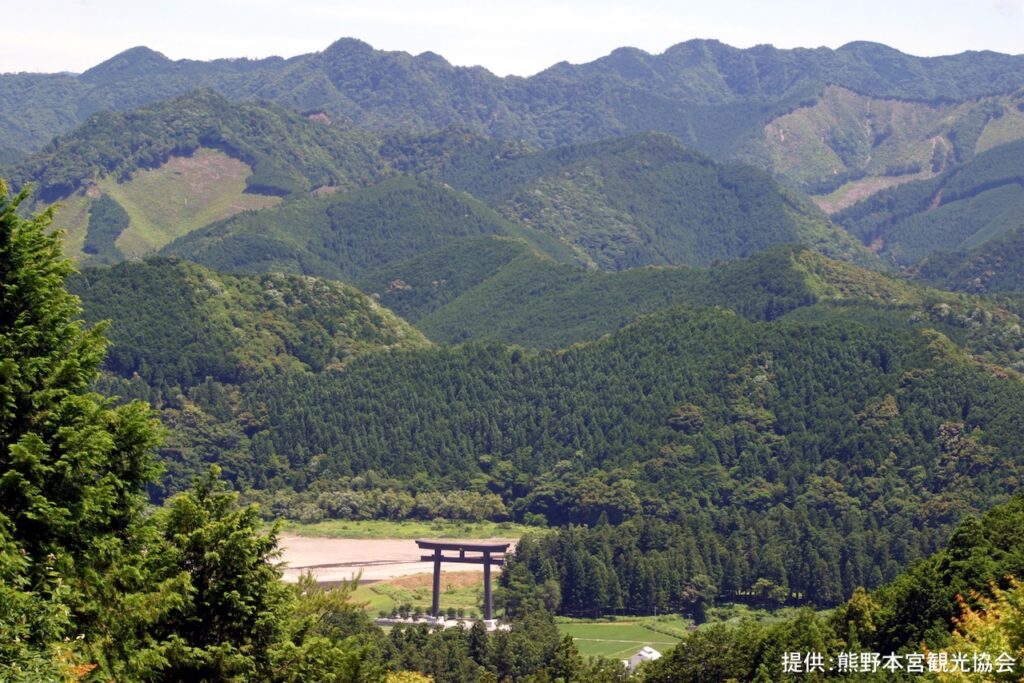
The Kumano Kodo comprises several historical pilgrimage routes, which add up to a total of 1,000 kilometers (620 miles). Among them, the Nakahechi Route is the most well-known and widely traveled. Takijiri-oji marks the traditional starting point of this iconic pilgrimage.
Scattered along the Kumano Kodo are more than 100 sacred shrines known as the Kumano Kujiuku Oji (“99 Oji”), where pilgrims once stopped to pray, rest, and prepare for the next stage of their journey. Among these, Takijiri-oji holds particular significance as one of the Gotai Oji (Five Grand Oji Shrines), the most prestigious of the Oji shrines, and has been revered by pilgrims for centuries.
Start Your First Kumano Kodo Journey at Takijiri-oji
Takijiri-oji is not only the traditional starting point of the Nakahechi Route, but also a place of profound spiritual significance. It has long been regarded as the sacred boundary separating the ordinary world from the holy realm of Kumano. For this reason, Takijiri-oji has been known for centuries as the true gateway to the Kumano Kodo, where pilgrims begin both their physical journey and their spiritual pilgrimage.
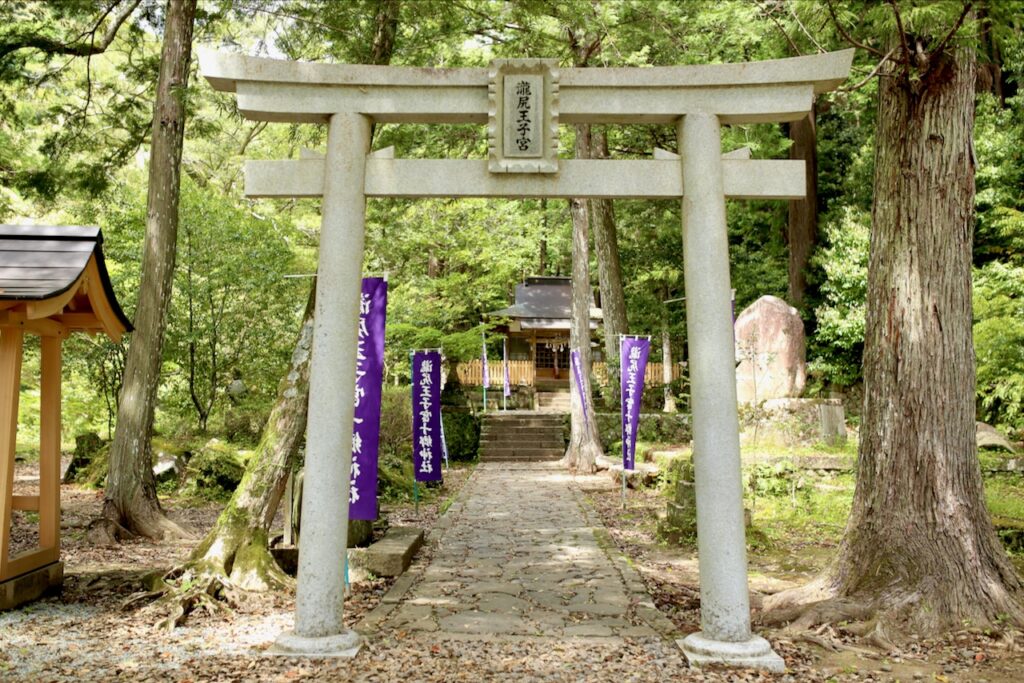
Beyond this point, the trail enters the mountains, where forest paths, ancient stone steps, and peaceful woodland scenery create the classic landscape of the Kumano Kodo. For first-time hikers, Takijiri-oji offers a memorable introduction to the pilgrimage, marking the moment when the journey truly begins.
The area is also easy to access, with a bus stop, free parking, and public restrooms conveniently located nearby, making it an ideal starting point for your walk.
Beginner-Friendly Nakahechi Itinerary(with an Optional Extension to Chikatsuyu)
If you’re walking the Kumano Kodo Nakahechi Route for the first time, we recommend staying in the Takijiri area the night before and setting out on your hike the following morning. This 2-day, 1-night itinerary allows you to enjoy a relaxed start without rushing.
Spend your first day exploring the Takijiri area and preparing for your hike. On the second day, walk one of the most popular beginner-friendly sections of the trail, from Takijiri-oji to Takahara Kumano Shrine. This section covers approximately 4 km (2.5 miles) and takes about 2–3 hours to complete.
If you have extra time and energy, you can continue beyond Takahara to Chikatsuyu, extending your hike by approximately 9 km (5.6 miles) and 5–6 hours. This longer route offers a more immersive experience of the Kumano Kodo’s beautiful mountain landscapes and historic pilgrimage trail.
Day 1: Prepare for Your Pilgrimage at Kumano Kodo Kan Pilgrimage Center and the Tonda River
On your first day, take a leisurely walk around the Takijiri area, where several attractions are located within about a 15-minute walk of Takijiri-oji.
A great place to begin is Kumano Kodo Kan Pilgrimage Center, the area’s visitor center and museum dedicated to the history, culture, and traditions of the Nakahechi Route. Its informative exhibits provide an excellent introduction to the Kumano Kodo, helping you better appreciate the pilgrimage before setting out on the trail.
The center also offers a selection of local souvenirs and hiking essentials, making it a convenient place to pick up any last-minute items. If you’d like to relax before your journey, you can also enjoy a cup of coffee or a light meal at the café inside.
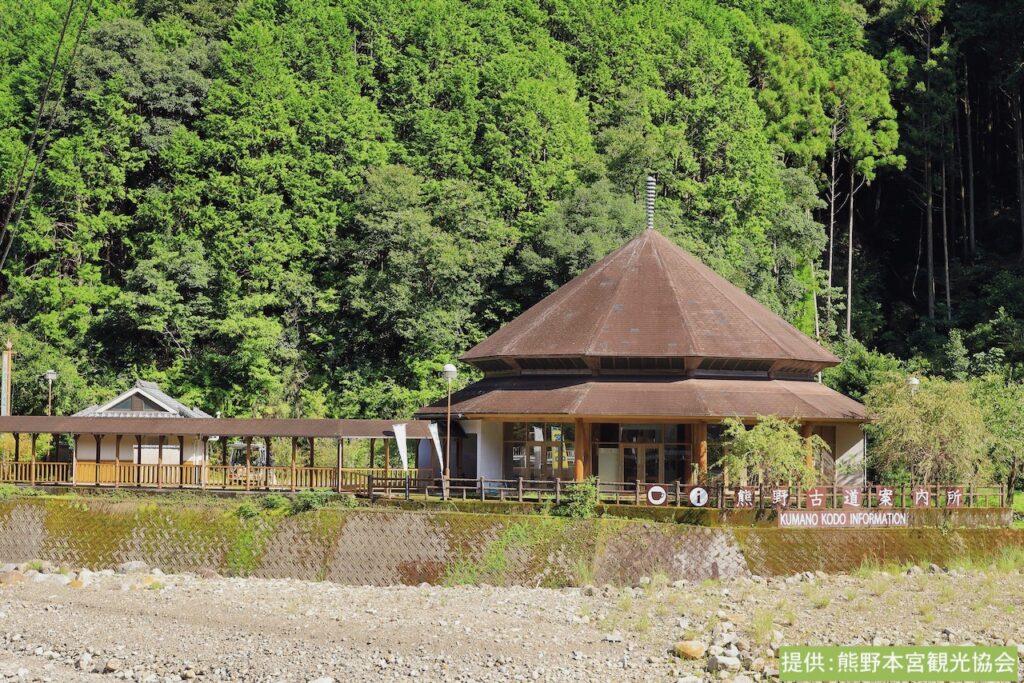
If you’d like to collect commemorative stamps along your pilgrimage, be sure to pick up the Dual Pilgrim Credential (free of charge) at Kumano Kodo Kan Pilgrimage Center. This special stamp book was created through a collaboration between the Kumano Kodo and the Camino de Santiago in Spain, the world’s only other UNESCO World Heritage pilgrimage route.
You can also purchase the Kumano Kodo Nakahechi Stamp Book for ¥100, allowing you to collect stamps at various locations along the trail and create a memorable keepsake of your journey.

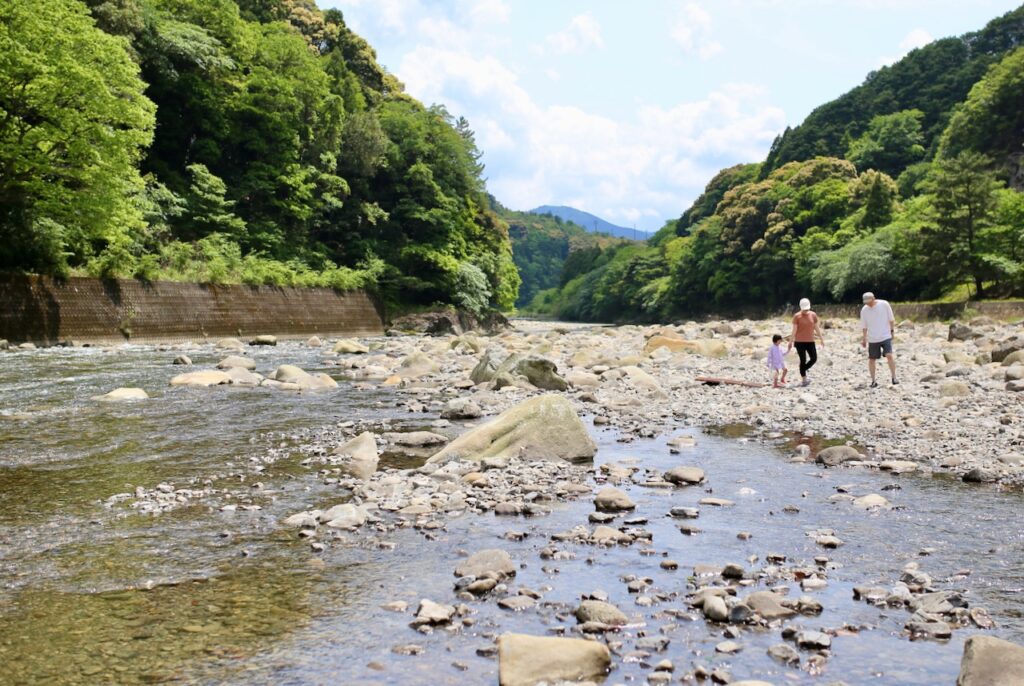
Takijiri-oji is also situated at the confluence of the Tonda River and the Ishibune River. Notably, the Tonda River is the only major river in Wakayama Prefecture that remains undammed, preserving its pristine natural environment.
Its crystal-clear waters are home to sweetfish (ayu) and Japanese trout (amago), while fireflies illuminate the riverbanks on early summer evenings—a testament to the river’s exceptional water quality. Even a leisurely stroll along the peaceful riverside offers a refreshing and relaxing way to connect with nature before your pilgrimage begins.
While the Takijiri area has a few small shops and tea houses, there are no convenience stores or restaurants open in the evening. We recommend purchasing any food, drinks, or other essentials before arriving in Takijiri.
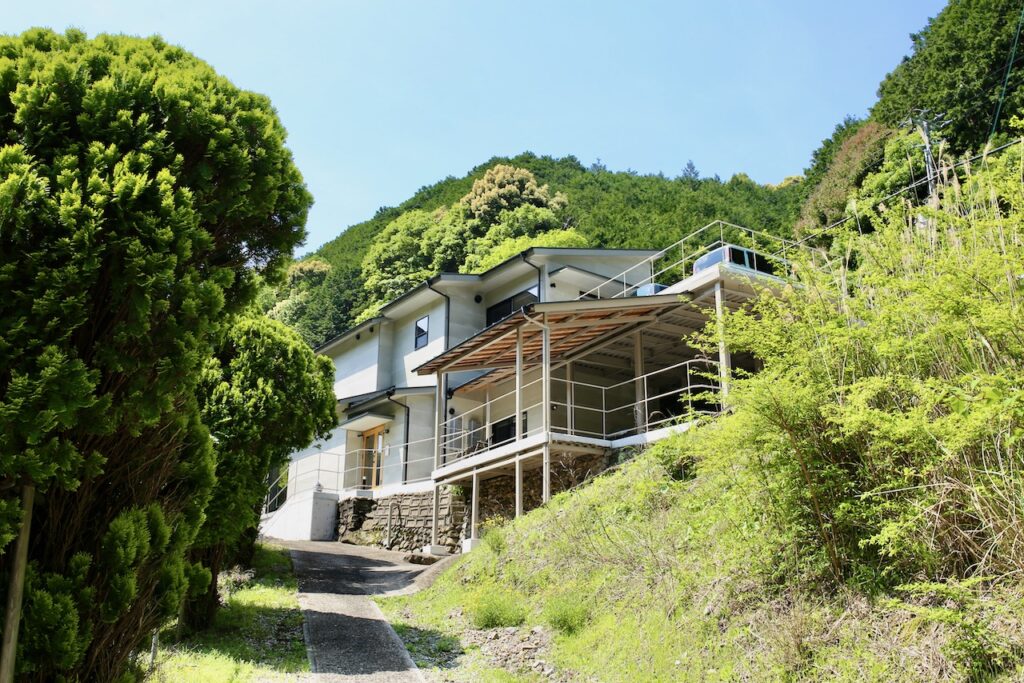
For your first night’s stay, we recommend SEN.RETREAT TAKIJIRI, a private vacation rental located within walking distance of Takijiri-oji. Designed for hikers and travelers, the property offers an all-inclusive stay with meals, thoughtful amenities, and services, allowing you to relax and prepare comfortably for your first Kumano Kodo adventure.
Day 2: Takijiri-oji to Takahara Kumano Shrine & Takahara Kirinosato (Approx. 4 km / 2–3 hours)
After enjoying breakfast at your accommodation, it’s time to begin your Kumano Kodo pilgrimage. From SEN.RETREAT TAKIJIRI, it’s about a 15-minute walk to Takijiri-oji, following the sidewalk along National Route 311 while taking in views of the peaceful Tonda River.
Cross three bridges as a refreshing mountain breeze accompanies your walk, and you’ll arrive at Takijiri-oji, the gateway to the sacred trail. Since the route ahead continues through the mountains, it’s a good idea to use the public restrooms near Takijiri-oji before setting off.
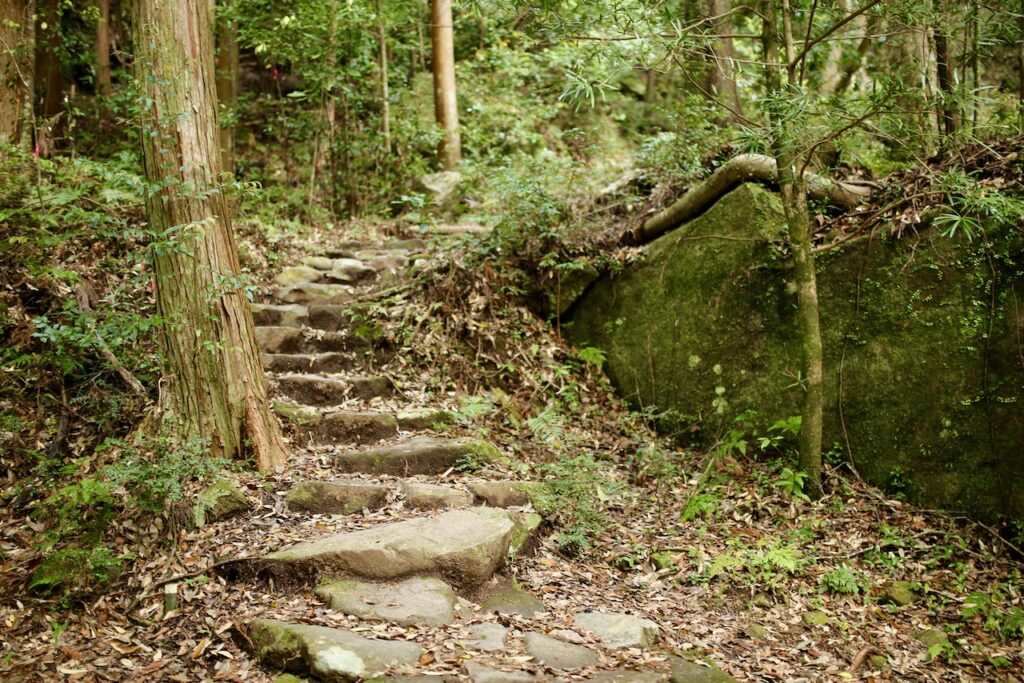
Pass through the shrine gate and step into the sacred realm of Kumano. After paying your respects, head behind the shrine, where the pilgrimage begins with a steep flight of ancient stone steps. The trail leads to Mt. Tsurugi (approximately 371 meters above sea level), rising immediately behind Takijiri-oji.
Although this section is relatively short at around 4 km (2.5 miles), it perfectly captures the essence of the Kumano Kodo, with beautiful forest scenery, historic stone paths, and rewarding ascents and descents along the way.
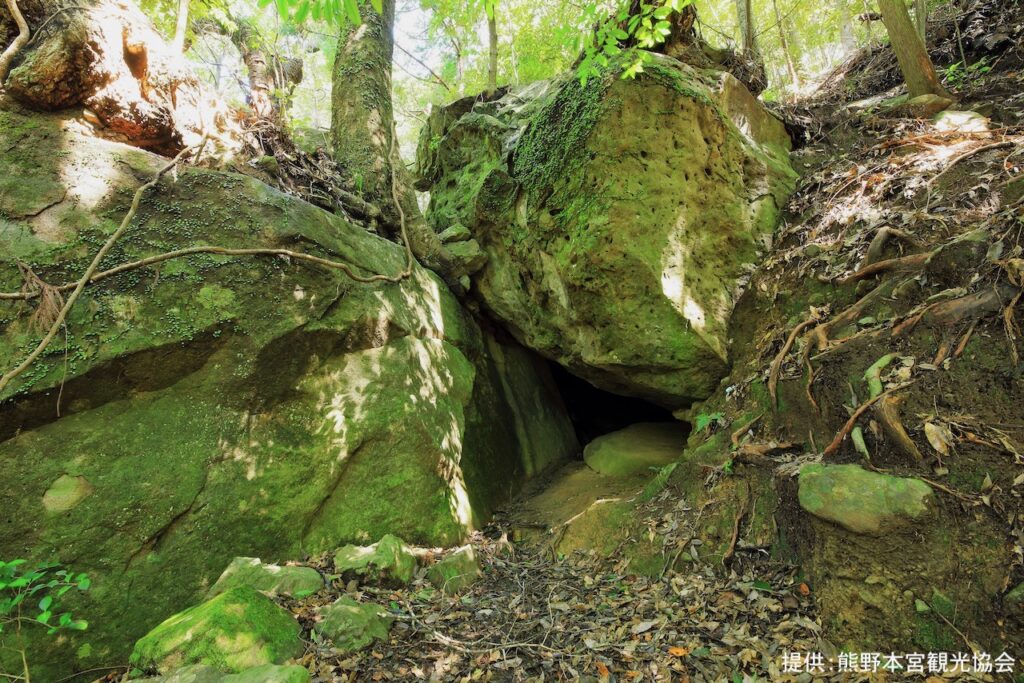
After climbing for a while, you’ll come across Tainai Kuguri (“Womb Passage”), a massive rock with a naturally formed opening.
According to local tradition, squeezing through the narrow gap symbolizes passing through the womb, bringing blessings for safe childbirth while cleansing away spiritual impurities. It is said to represent a symbolic rebirth, allowing pilgrims to emerge spiritually renewed as they continue their journey along the Kumano Kodo.
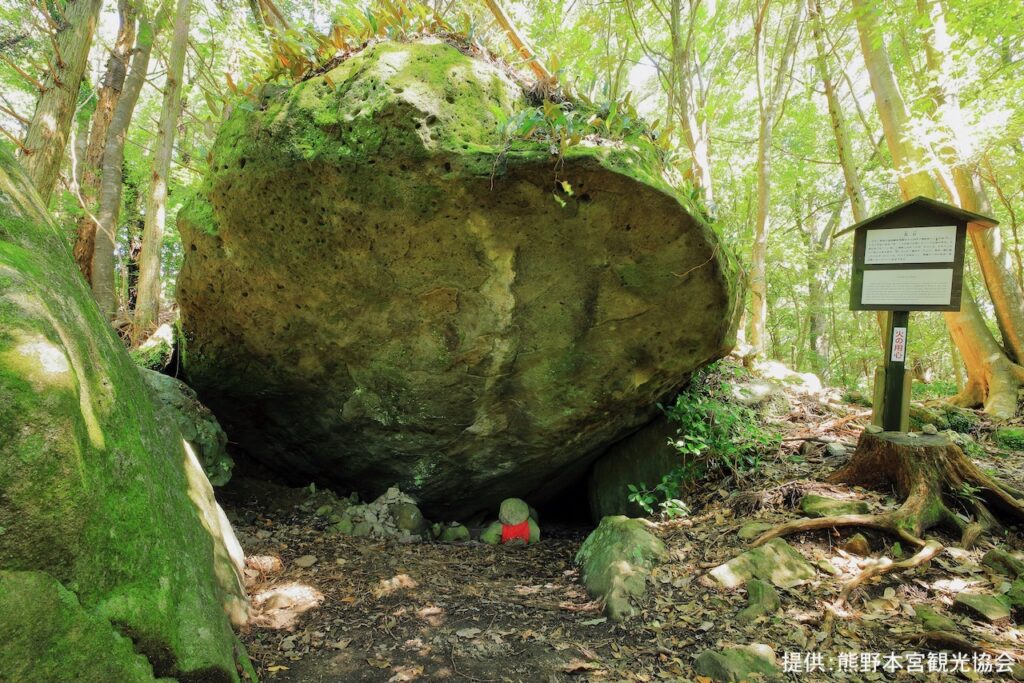
Nearby is Chiiwa (Breast Rock), a sacred rock associated with a local legend connected to Fujiwara no Hidehira, the powerful ruler of northern Japan’s Ōshū region during the late Heian period. According to the legend, the rock has long been revered as a place associated with nourishment, protection, and maternal blessings.
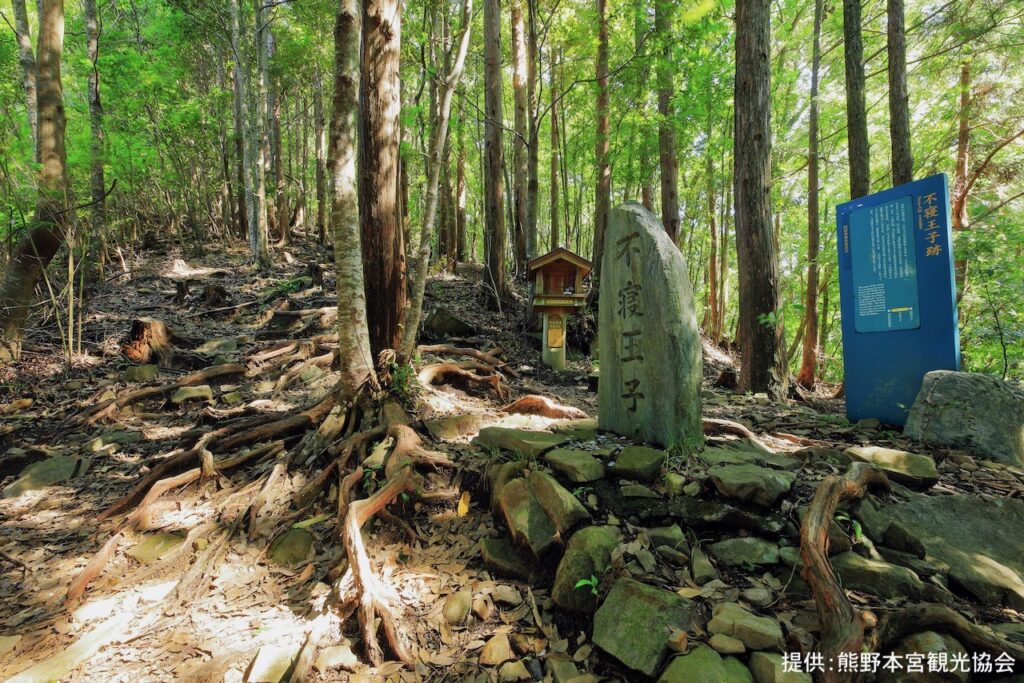
Continuing up the steep trail, you’ll pass the stone marker of Fushin Oji, one of the historic Oji shrines along the pilgrimage route. After reaching the summit of Mt. Tsurugi, you’ll arrive at the Tsurugiyama Kyōzuka Ruins, the remains of an ancient burial mound where Buddhist sutras were once interred as sacred offerings.
From here, the trail becomes much gentler, offering a welcome break after the steady climb. After ascending the final set of steps and walking a little farther, you’ll catch sight of SEN.RETREAT TAKAHARA, a contemporary wooden retreat that blends beautifully into the surrounding mountain landscape.
A few minutes later, you’ll arrive at Takahara Kumano Shrine, one of the oldest and most historically significant shrines along the Nakahechi Route. Surrounded by tranquil cedar forests, it has long served as a place where pilgrims pause to pray and rest on their journey through the sacred mountains of Kumano.
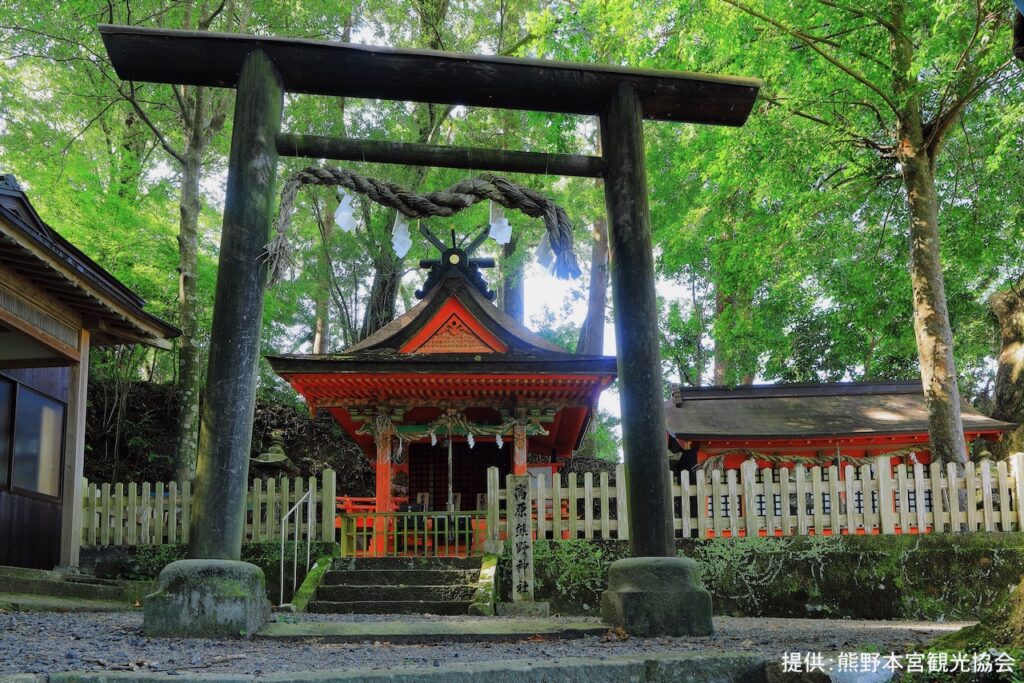
Just a short walk from Takahara Kumano Shrine is Takahara Kirinosato, a rest area equipped with public restrooms. Known for its spectacular panoramic views, it is the perfect place to take a break and celebrate reaching the end of this section of the trail.
Be sure to explore the Takahara area as well. Check out our guide to Takahara’s local restaurants, cafés, and sightseeing spots for the latest recommendations, and make the most of your time in this charming mountain village.
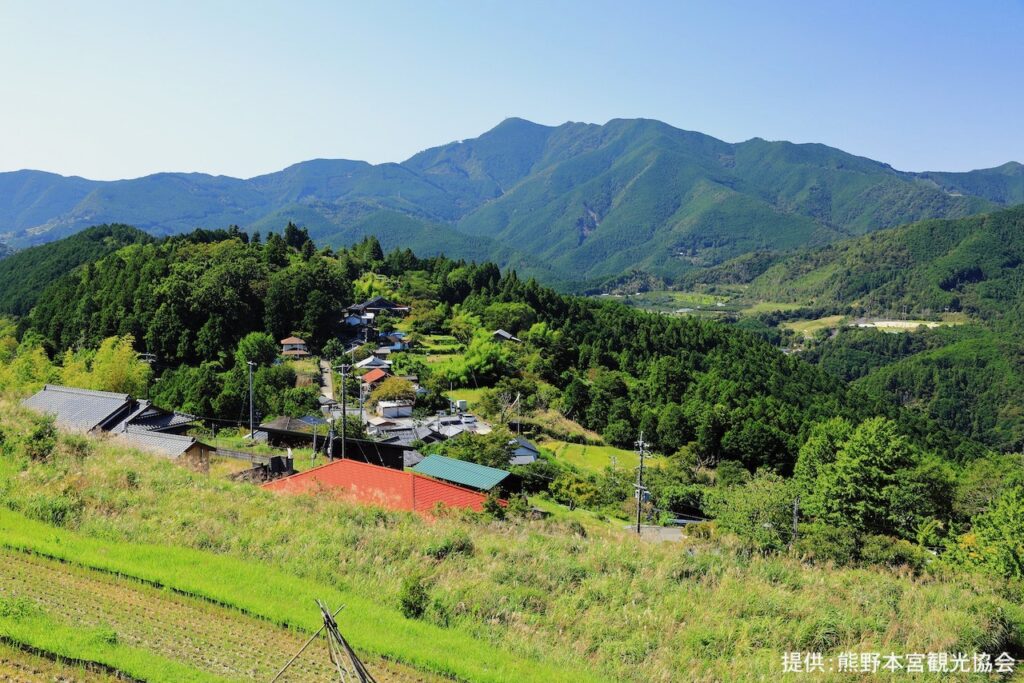
Optional Extension: Takahara Kumano Shrine to Chikatsuyu (Approx. 9 km / 5–6 hours)
If you have the time and energy, consider extending your hike to Chikatsuyu. From Takahara Kumano Shrine, the route is approximately 9 km (5.6 miles) and takes around 5–6 hours to complete.
Compared with the steep climb from Takijiri to Takahara, this section features gentler elevation changes, making it a more relaxed walk. Along the way, you’ll encounter historic pilgrimage sites, scenic photo spots, and villages that still preserve the atmosphere of the old post towns that once welcomed travelers on the Kumano Kodo.
Notable landmarks include the historic Daimon-oji and Jujo-oji shrines. About a 15-minute downhill walk from Osakamoto-oji, you’ll find Michi-no-Eki Kumano Kodo Nakahechi, a convenient roadside station where you can take a break, enjoy a meal, and browse local specialties and souvenirs before continuing your journey.
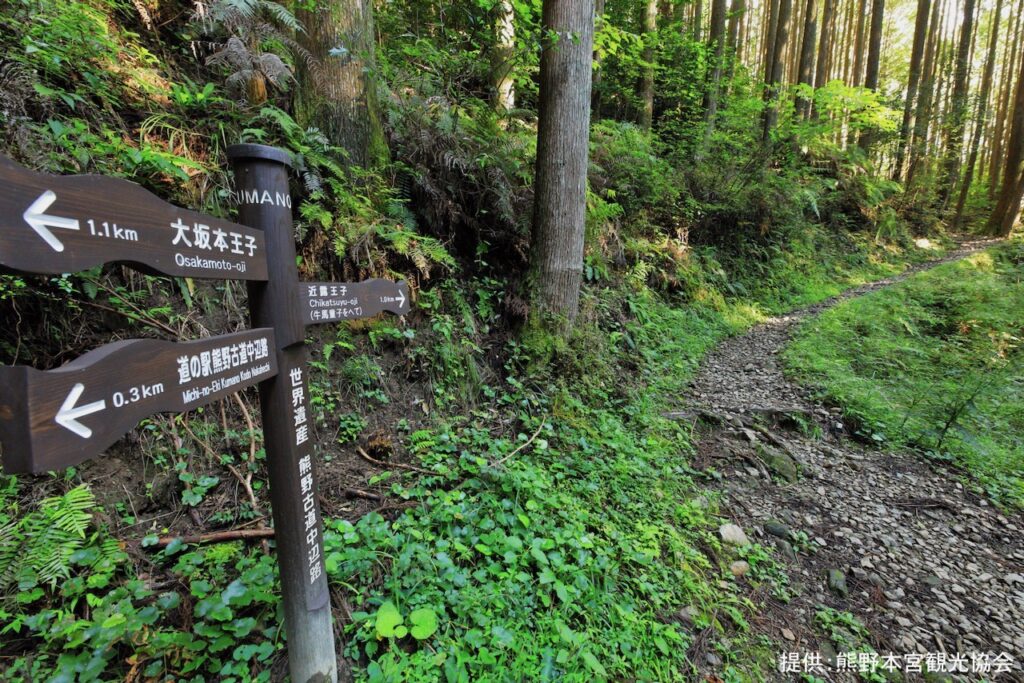
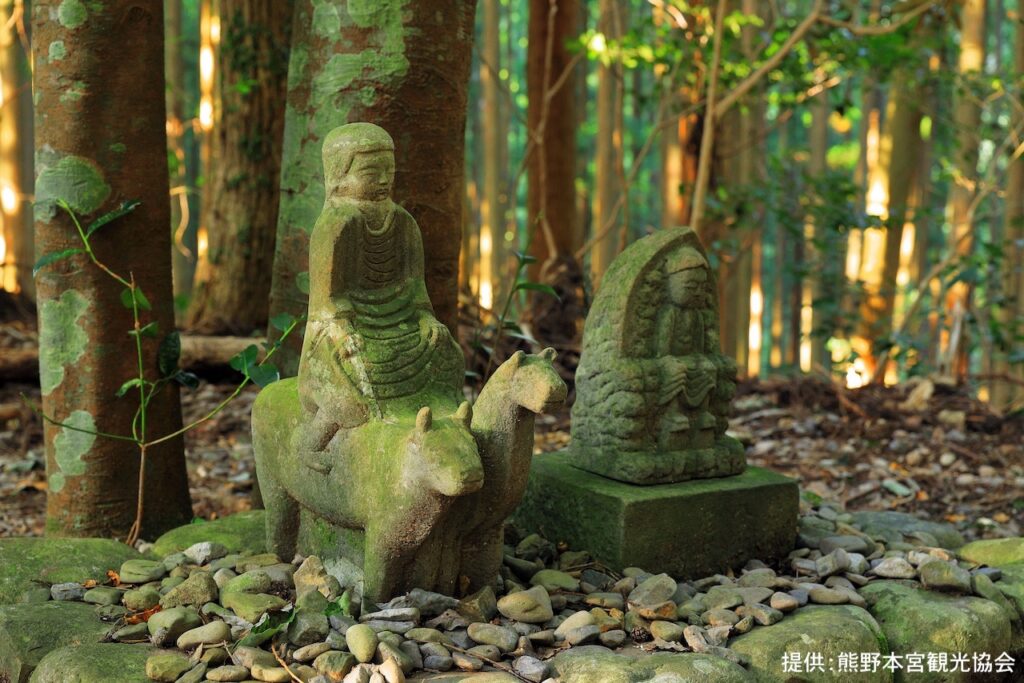
About 15 minutes beyond the roadside station, you’ll reach one of the most iconic landmarks on the Nakahechi Route—the Gyūba Dōji Statue.
This small stone statue depicts a young pilgrim monk riding both an ox and a horse, a unique image that has become a symbol of the Kumano Kodo. Believed to have been carved during the Meiji era in remembrance of Emperor Kazan’s pilgrimage to Kumano, the statue stands only about 50 cm (20 inches) tall. Its modest size and charming appearance make it one of the trail’s most beloved and photographed landmarks.
Toward the end of the route, you’ll arrive at Chikatsuyu-oji, one of the most important historic Oji shrines along the Nakahechi Route.
Surrounding the shrine is the village of Chikatsuyu, which once flourished as a traditional post town serving pilgrims on their journey to Kumano. Today, the village is home to a selection of inns, cafés, and local shops, making it a popular stopover for hikers walking the Kumano Kodo. Whether you’re ending your day’s hike or simply taking a well-earned break, Chikatsuyu is an inviting place to relax and soak up the atmosphere of this historic pilgrimage route.
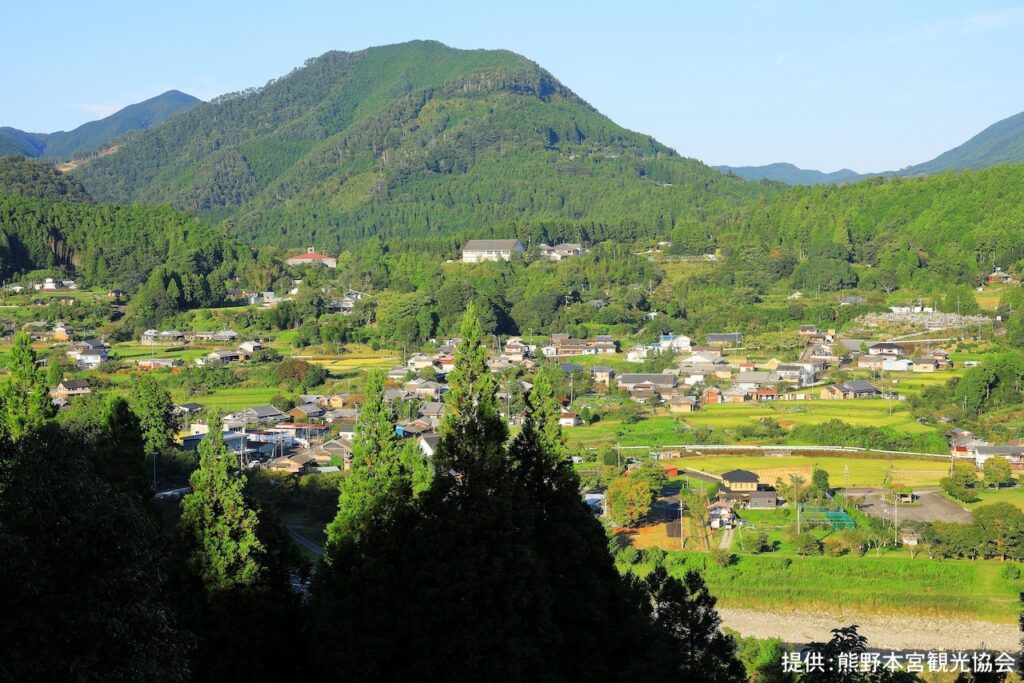
For your return journey, you can take a local bus from Kurisugawa Bus Stop, located about a 30–40 minute walk from Takahara, or from one of the bus stops near Chikatsuyu-oji if you continue to Chikatsuyu.
Walking from Takijiri to Chikatsuyu in a single day covers approximately 13 km (8 miles). While achievable, beginners are encouraged to plan at a comfortable pace. If you’re concerned about your fitness level, consider ending your hike in Takahara or using the local bus to shorten the route.
Just a short walk from Chikatsuyu-oji, you’ll find SEN.RETREAT CHIKATSUYU, a unique accommodation created from stylish container houses. It’s an ideal place to relax and recover after your hike before continuing your journey along the Kumano Kodo the following day.
Stay at the Gateway to the Kumano Kodo SEN.RETREAT TAKIJIRI – A Private Vacation Rental
The accommodation featured in this itinerary, SEN.RETREAT TAKIJIRI, is located along the Tonda River, about a 15-minute walk south of Takijiri-oji.
Offering an all-inclusive stay with meals, thoughtful amenities, and personalized services, the property provides a comfortable base for beginning your Kumano Kodo adventure. The entire house can be reserved exclusively for groups of 2 to 16 guests, making it an excellent choice for families, friends, or small groups traveling together.
Spend a relaxing evening preparing for your pilgrimage, enjoy quality time with your companions, and set out the next morning refreshed and ready to experience your first walk along the Kumano Kodo.
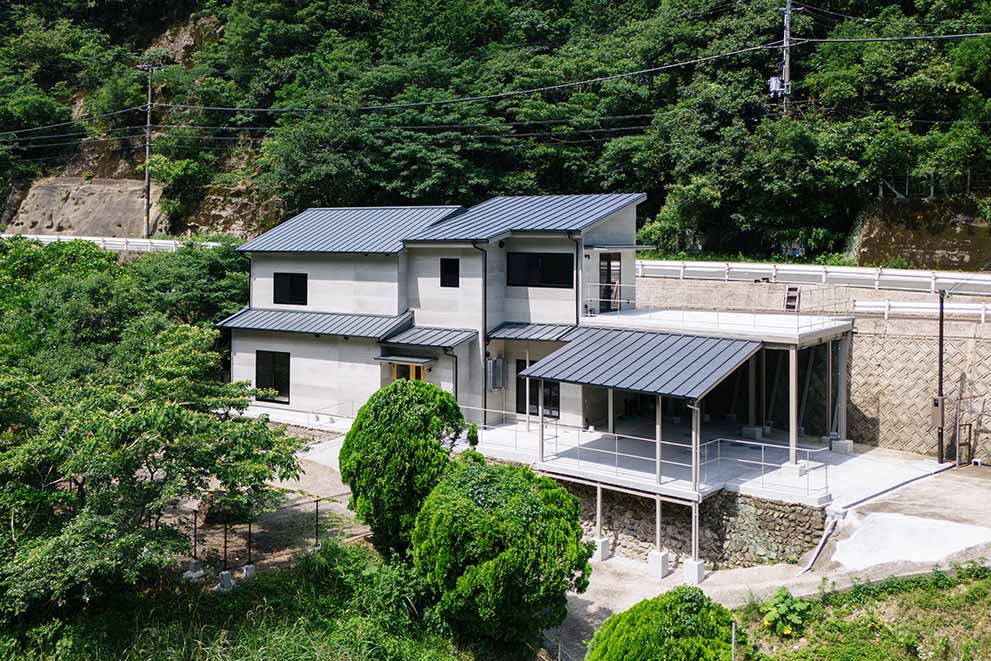
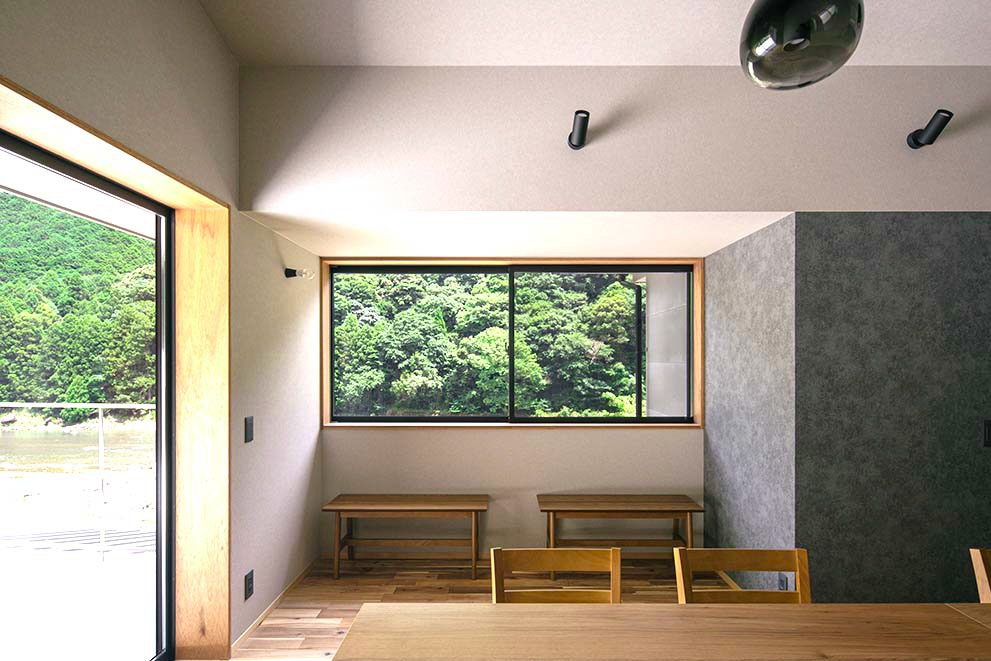
Inside, you’ll find a beautifully designed contemporary space where large picture windows frame the surrounding mountains of Kumano and the tranquil Tonda River like works of art, showcasing the changing beauty of each season.
The property is also fully equipped with a modern kitchen, an outdoor picnic area, and barbecue facilities, allowing you to enjoy a stay that feels more like relaxing in your own private vacation home than checking into a traditional accommodation.
One of the highlights of your stay is the thoughtfully curated dining experience, featuring ingredients sourced from Wakayama Prefecture. Your all-inclusive stay includes local craft beer, Ito Farm’s famous mandarin orange juice and dried mandarins, premium ice cream from Kurosawa Farm, and a selection of regional snacks—offering a delicious introduction to the flavors of Kumano and Wakayama.

For dinner, you can choose from several carefully prepared menus, including a barbecue featuring seasonal mountain and coastal ingredients, venison sukiyaki (Japanese hot pot), or, during the winter and spring months, a hearty wild boar shabu-shabu (another type of hot pot).
As night falls, step out onto the terrace and gaze up at a sky filled with countless stars. Then, settle in for a peaceful night’s sleep surrounded by the quiet beauty of nature, so you’ll be refreshed and ready for the next day’s walk along the Kumano Kodo.

Further along the pilgrimage route, you’ll also find SEN.RETREAT TAKAHARA and SEN.RETREAT CHIKATSUYU, two sister properties offering unique experiences in different settings along the Kumano Kodo.
Each accommodation has its own distinctive charm and recommended ways to enjoy your stay. Be sure to explore our dedicated guides for each property to help you plan the perfect Kumano Kodo journey.
Access to Takijiri-oji
Takijiri-oji is located in Tanabe City, Wakayama Prefecture. The nearest railway station is Kii-Tanabe Station on the JR Kisei Main Line (Kinokuni Line), from where you can reach Takijiri-oji by local bus.
Below, you’ll find the main transportation options for reaching Takijiri-oji by train or car.
| By Train and Bus from Osaka From Shin-Osaka Station or Tennoji Station, take the JR Limited Express Kuroshio to Kii-Tanabe Station (approximately 2 hours). From the station, board a Ryujin Bus bound for the Nakahechi area and get off at Takijiri Bus Stop (approximately 40 minutes). From there, Takijiri-oji is just a short walk away. By Car from Osaka If you’re driving from Osaka, take the Hanwa Expressway and exit at Nanki-Tanabe Interchange (IC). From the interchange, it’s approximately 30–40 minutes by car to Takijiri-oji. Free parking is available both near Takijiri-oji and at SEN.RETREAT TAKIJIRI. Returning to Takijiri by Bus from Takahara or Chikatsuyu After completing your hike, you can return to Takijiri by taking a local bus from Kurisugawa Bus Stop, located about a 30–40 minute walk from Takahara Kumano Shrine, or from one of the bus stops in the Chikatsuyu area. Both routes return to Takijiri Bus Stop, the closest stop to Takijiri-oji. As bus services are limited, we recommend checking the timetable in advance and planning your hike accordingly. |
The Kumano Kodo follows mountain trails, so we recommend wearing comfortable hiking shoes and clothing suitable for walking. As the weather in the mountains can change quickly, it’s also a good idea to carry rain gear in your backpack. For more information on what to wear and what to bring, be sure to check out our guide to essential gear for walking the Kumano Kodo.
This itinerary is designed with beginners in mind, making it suitable for families with elementary school-aged children who enjoy walking. If you have extra time and energy, consider continuing to Chikatsuyu to discover even more of the Kumano Kodo’s rich history, beautiful landscapes, and spiritual atmosphere.
※writer:FootPrints 前田 有佳利(Written by: Yukari Maeda)
※Translation: This English version was generated using AI and has been reviewed for readability.
Other Articles