Autumn is sea-of-clouds season: Five Kansai spots from classics to hidden gems
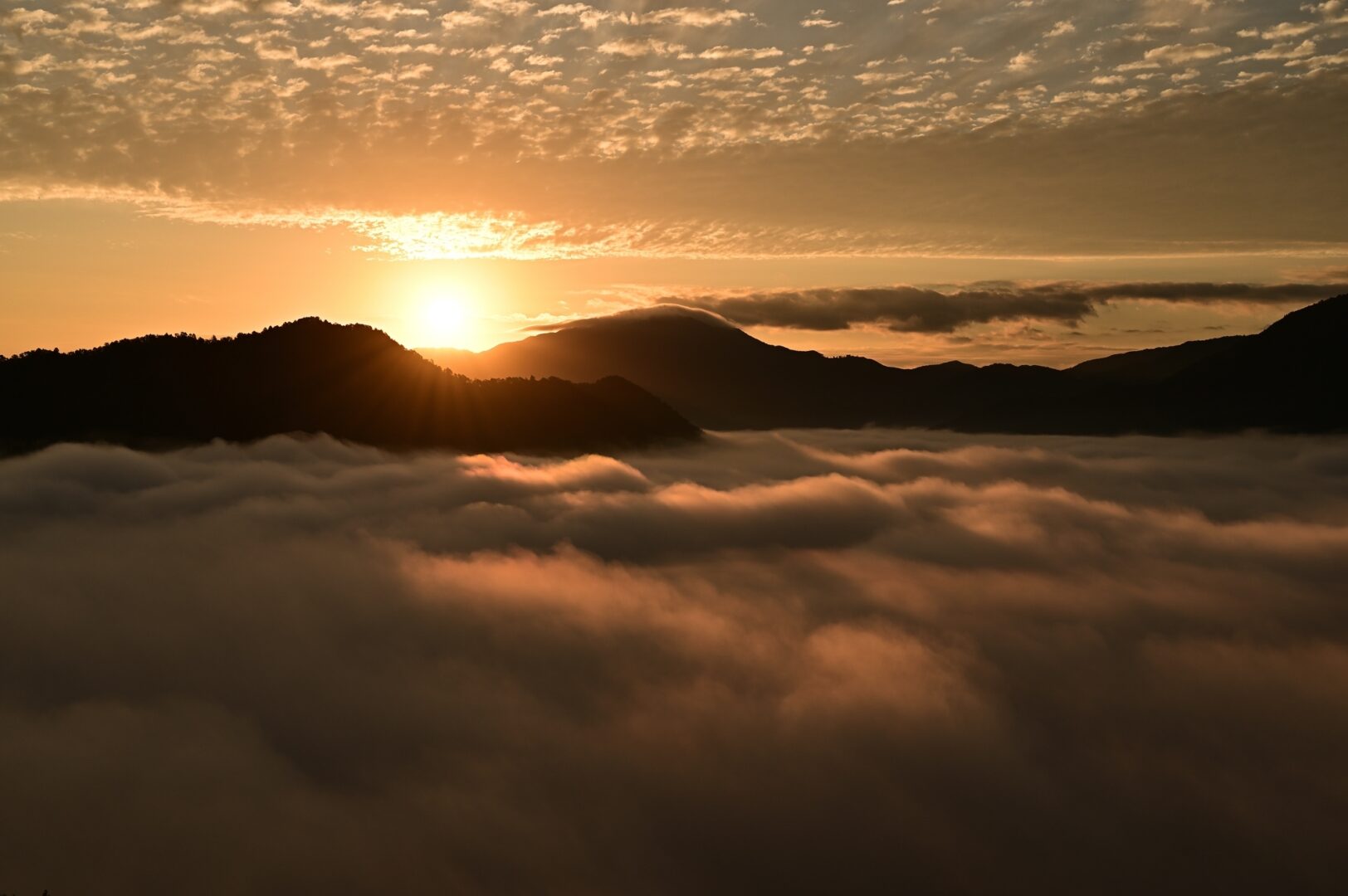
Have you ever seen unkai—a sea of clouds? It’s so beautiful it can leave you speechless. A sea of clouds is a scene where clouds spread out like an ocean—think of the view when you look down from an airplane, but there are places you can see it from the ground as well. Unkai takes many forms: clouds glowing with city lights before dawn, set against a rosy dawn sky, or lit by the morning sun—each one is breathtaking.
Sea of Clouds (Unkai): What It Is—and How to Photograph It

What is a sea of clouds (unkai)?
From the ground, unkai typically appears as stratus or stratocumulus—cloud layers that form when moist air near the surface cools rapidly, often due to radiative cooling under clear, calm conditions.
When to go
Your best chance is before dawn through early morning, especially in spring and autumn. Look for clear, windless mornings following rain the day before, when the air is moist and the day–night temperature difference is large.
Photo tips
Arrive about two hours before sunrise to scout your spot. Shoot in manual mode and adjust carefully for correct exposure to avoid blown highlights or crushed shadows. If you’re lucky enough to catch unkai, keep shooting—the scene changes minute by minute. After sunrise, watch your histogram to protect highlights.
Plan your trip
Because many factors must align, ground-level viewpoints are limited. In this guide, we’ve gathered recommended unkai spots in Kansai, along with nearby accommodations—since unkai is usually visible only from dawn to shortly after sunrise, an overnight stay is essential.
Sea of Clouds Year-Round: Koya-tsuji Rest Area (Nosegawa Village, Nara)
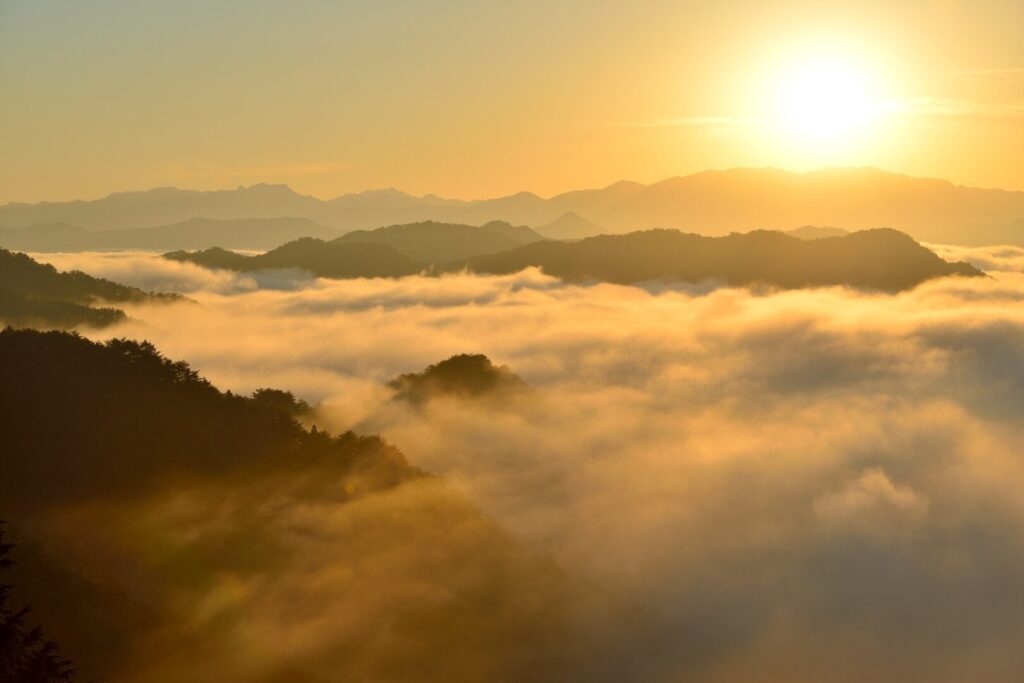
Nosegawa Village in Nara Prefecture sits at the western edge of the prefecture, with the sacred site of Mount Koya (Koyasan) to the north. Drive south from Koyasan along the Koya-ryujin Skyline and you’ll reach the Koya-tsuji Rest Area, a well-known viewpoint. While seas of clouds (unkai) are most often seen in spring and autumn, this spot offers a chance to see them year-round. That’s because Nosegawa is encircled by peaks over 1,000 meters—including Natsumushi-yama, Obako-dake, Kojin-dake, and Jingamine—where moist air cools easily, making unkai more likely to form. Beyond the sea of clouds, you can also enjoy fireflies in summer and rime ice in winter.
The road to Koya-tsuji Rest Area is winding and can feel a little daunting to drive, but the view of the sea of clouds will make you forget the effort. In winter, be sure to equip winter tires (snow tires) before you go.
If you’re visiting Nosegawa, consider adding camping to your plans. The village has the Miyanomukai Campsite and the Kita-Imanishi Campsite, both with bungalows available. Kita-Imanishi is relatively new and popular. Note that the campsites are closed from December to March; during winter, stay at Hotel Nosegawa, where you can relax in the hot springs and enjoy a fine, seasonal meal.
Best time to see the sea of clouds
All year round (especially spring and autumn)
Address.
〒637-0425 Kami, Nosakogawa Village, Yoshino-gun, Nara Prefecture
Contact information
Nosakogawa Village Hall, General Affairs Section
0747-37-2101
Official website
https://www.vill.nosegawa.nara.jp/index.html
Cloud and Sea Information (Courtesy of Mitsubishi Motors)
Car-Accessible Sea of Clouds: Oeyama & Onitake Inari Shrine (Fukuchiyama, Kyoto Prefecture)
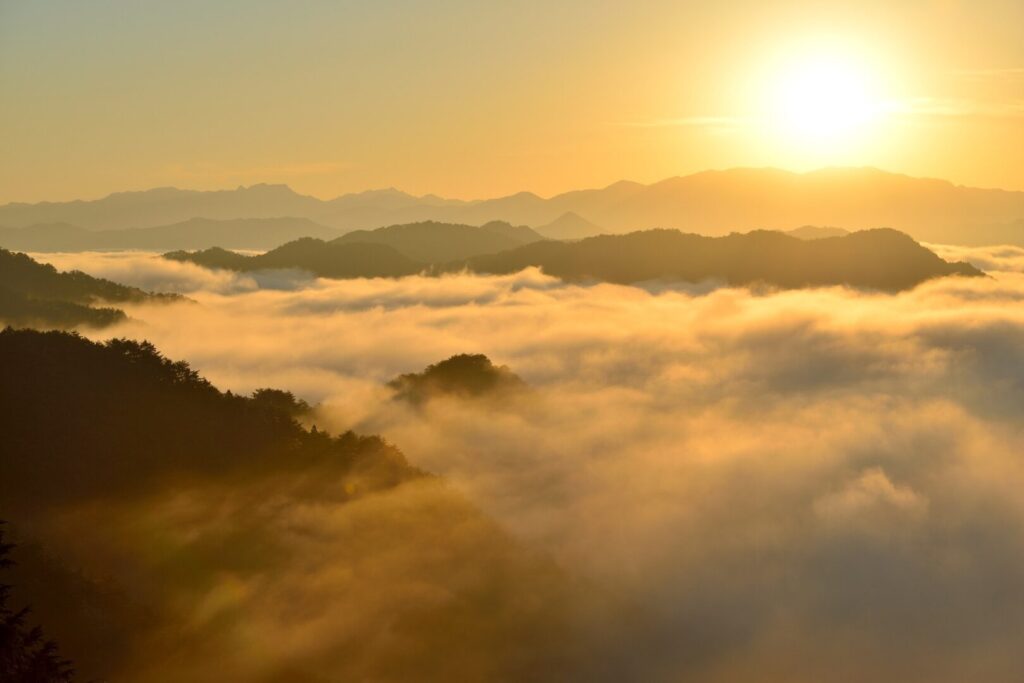
From November to December, Oeyama (elev. 833 m) in Fukuchiyama, Kyoto Prefecture, offers excellent chances to see the sea of clouds (unkai). Among its viewpoints, Onitake Inari Shrine—set on the mountain’s mid-slope with a wide, open outlook—is one of the best. Unlike many unkai spots, it’s reachable by car in about two hours from Kyoto City. Note: there’s no dedicated parking, so visitors typically use the road shoulder with care.
Oeyama is steeped in folklore about ogres (oni). After enjoying the views, visit Onitake Inari Shrine and wander the area—there’s even an “Oni no Cave.” The shrine issues goshuin (seal stamps) only on designated days, so check the official website in advance if you’d like one.
If you’re coming to Oeyama for unkai, consider staying at Ryokan Oeyama. Look for the large “Oni Soba” sign along National Route 175—that’s the inn. From there, it’s about a 35-minute drive to Onitake Inari Shrine.
Best time to see sea of clouds
Autumn – winter (end of October – December)
Location.
〒620-0327 Kitahara, Oe-cho, Fukuchiyama City, Kyoto
Contact information
Fukuchiyama City Hall, Oe Branch Office
0773-56-1102
Official website
https://www.city.fukuchiyama.lg.jp/soshiki/65/23503.html
Cloud and Sea Information (Courtesy of Mitsubishi Motors)
https://www.mitsubishi-motors.co.jp/special/weekend-explorer/unkai/16.html
Takahara Kiri-no-Sato — A Rest Stop on the Kumano Kodo (Tanabe, Wakayama)

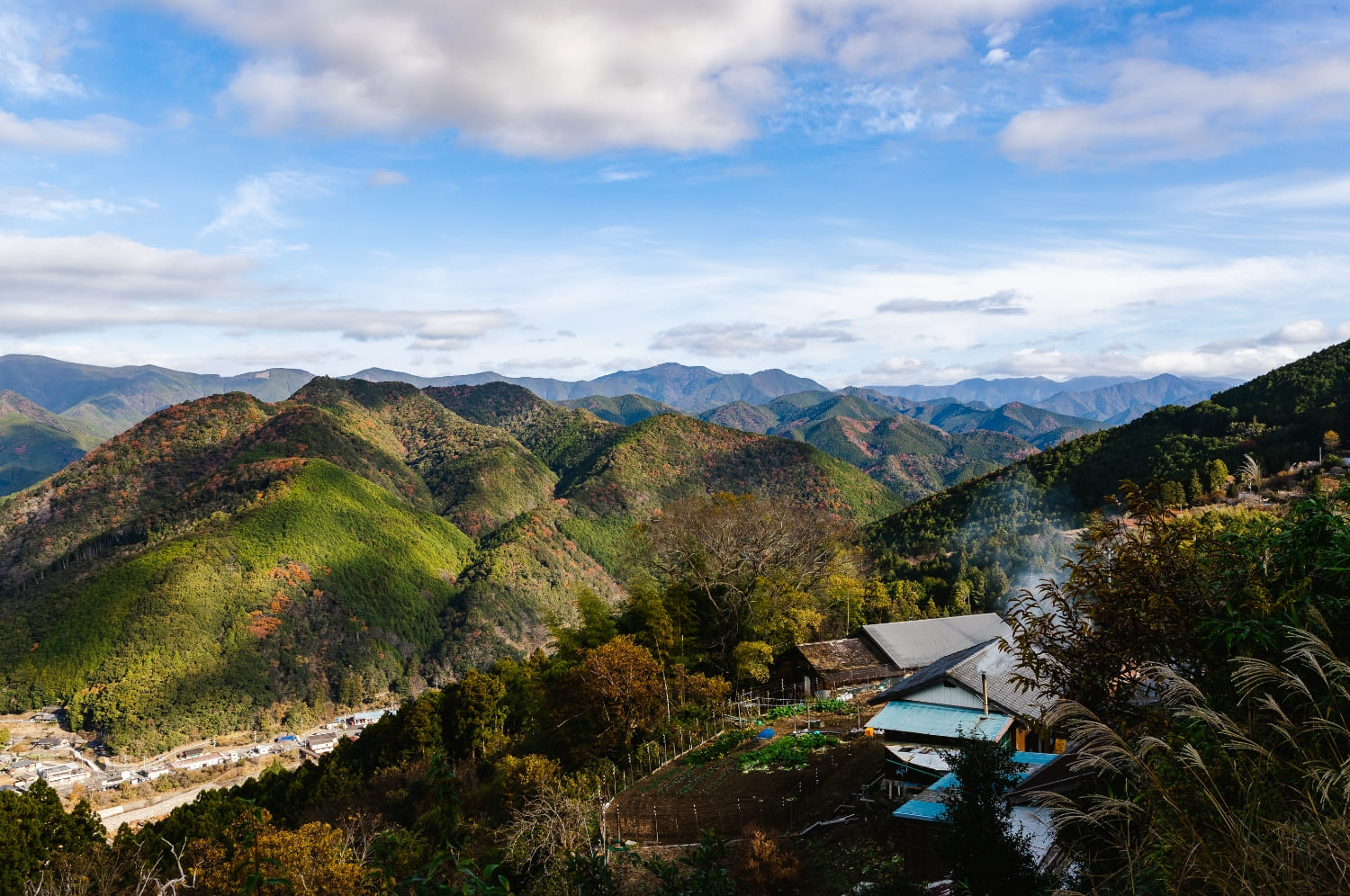
If you’re visiting the UNESCO World Heritage–listed Kumano Kodo, be sure to stop by Takahara Kiri-no-Sato in Tanabe, Wakayama. For centuries, travelers from across Japan and beyond have admired the sweeping, sky-high views from this ridge—an ideal vantage point for unkai (sea of clouds) with panoramic sightlines over the Hatenashi Mountains. You’ll also find convenient facilities on site, including restrooms, a shop, and parking.
At Takahara Kiri-no-Sato, the sea of clouds often lingers for up to an hour after sunrise, so don’t rush off. Nearby stands Takahara Kumano Shrine, believed to be one of the oldest shrines along the Kumano Kodo—well worth a visit.
Planning an overnight stay in Takahara? Consider SEN.RETREAT TAKAHARA, a private, whole-villa guesthouse where you can enjoy BBQ on the terrace, a cozy campfire, and even a sauna.
Best time to see the sea of clouds
Sep-Nov.
Location.
〒646-1416 1041 Takahara, Nakaheji-cho, Tanabe City, Wakayama Prefecture
Contact information
Nakabeji Town Tourist Association
0739-64-1470
Official website
Japan’s Machu Picchu: Ritsuunkyo & Takeda Castle Ruins (Asago, Hyogo)
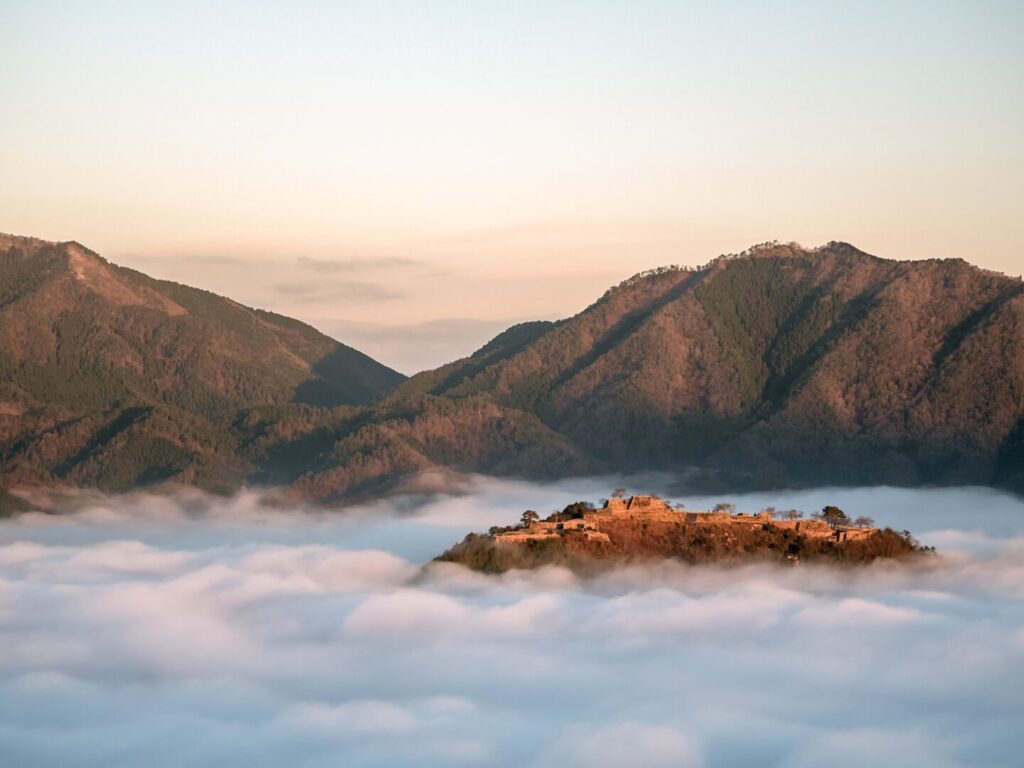
Ritsuunkyo (Asago, Hyogo) has become famous as **“Japan’s Machu Picchu.” From its viewpoints, the Takeda Castle Ruins rise above a sea of clouds (unkai), creating a striking juxtaposition of nature and historic architecture—like a castle floating in the sky.
Because you can’t drive all the way to the lookout, the best place to view the unkai is the First Observatory, about a one-hour hike from the Ritsuunkyo Parking Area. The effort makes the sight all the more unforgettable.
For accommodation, we recommend Hotel EN, a multi-use complex in the old castle town, renovated from a Meiji-era (1902) former sake shop. In addition to the hotel, it houses a restaurant and café, providing a welcoming hub for visitors and locals alike.
Best time to see the sea of clouds
Oct-Nov.
Location.
Hamaya, Tamba Sasayama, Hyogo Prefecture
Contact information
Sasayama Tourist Information Centre
079-552-3380
Official website
Cloud and Sea Information (Courtesy of Mitsubishi Motors)
https://www.mitsubishi-motors.co.jp/special/weekend-explorer/unkai/17.html
Mount Sakazukigatake — Known for Dense Fog Formed by Dramatic Temperature Swings (Tamba-Sasayama, Hyogo)
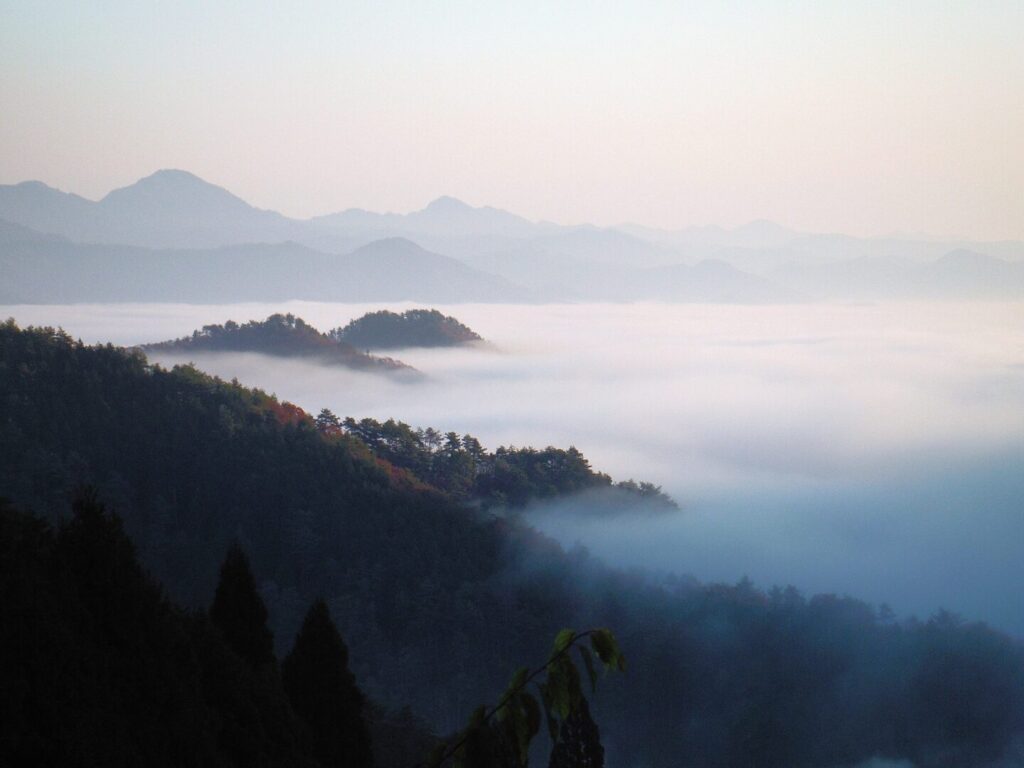
Mount Sakazukigatake in Tamba-Sasayama, Hyogo Prefecture is famed for “Tamba-giri,” a mineral-rich mist that often blankets the area. The mountain takes its name from its shape—said to resemble an upturned sake cup. From its slopes you can look out over the Sasayama Basin, encircled by low mountains, making this an ideal vantage point for unkai (sea of clouds). The region’s celebrated Tamba black soybeans (kuromame) are nurtured in this very climate.
If you’re visiting Sakazukigatake, consider staying at Sasayama Castle Town Hotel NIPPONIA, a sister property to Hotel EN near Takeda Castle. This dispersed hotel occupies a collection of renovated historic buildings—including century-old residences—woven throughout the old castle town. Expect memorable, locally sourced cuisine. The hotel is conveniently located about a 10-minute drive from Mount Sakazukigatake.
Best time to see the sea of clouds
Oct-Nov.
Location.
Hamaya, Tamba Sasayama, Hyogo Prefecture
Contact information
Sasayama Tourist Information Centre
079-552-3380
Official website
Autumn Unkai Season: Hike Through the Clouds and Enjoy the View
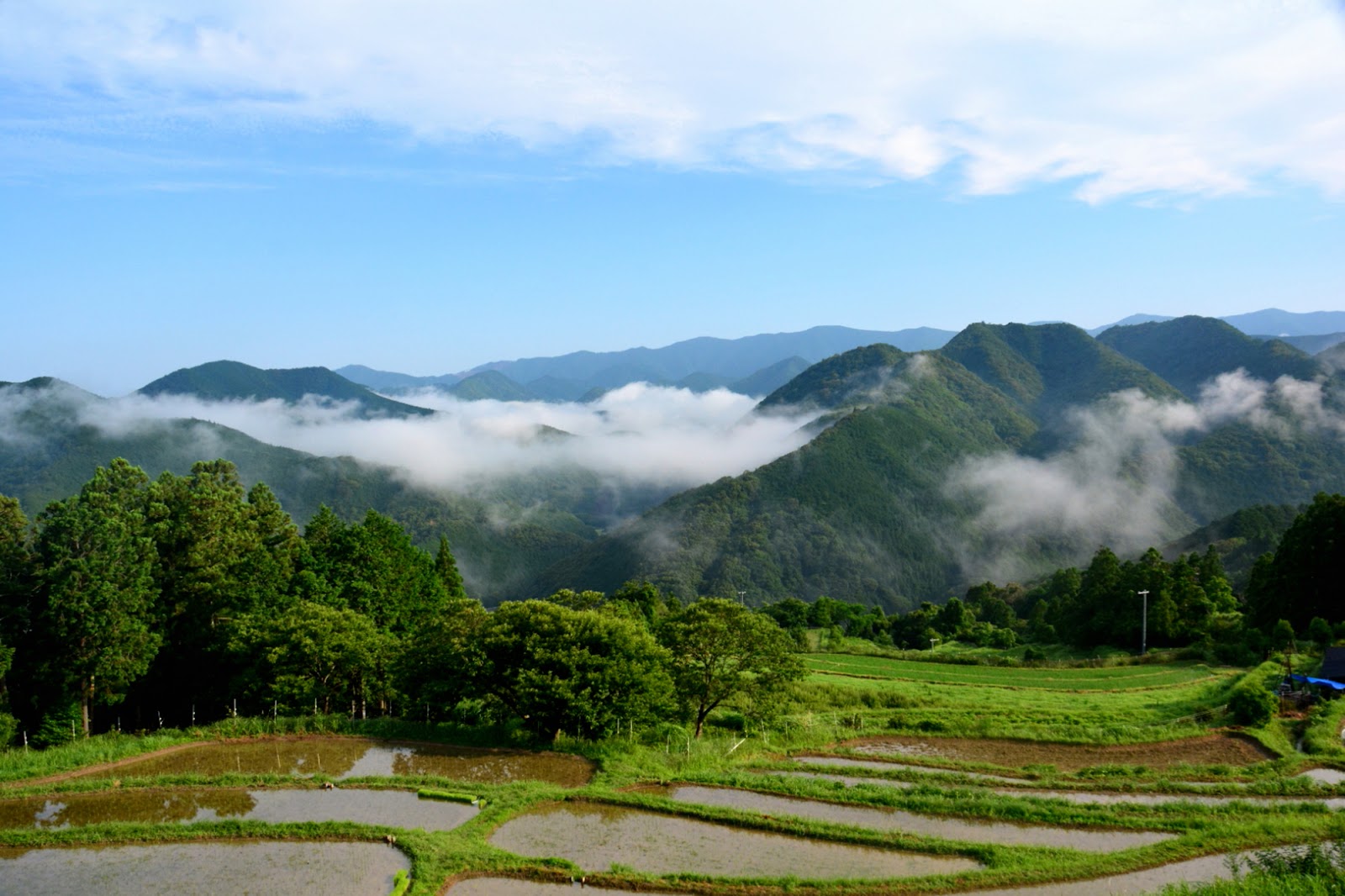
Autumn is when your chances of seeing a sea of clouds are highest. It’s also prime time for leaf peeping and savoring local autumn specialties. Until the first snow, the weather is ideal for hiking. After watching unkai unfurl at sunrise, take your time to explore nearby sights and enjoy scenic hikes in the area.
Other Articles