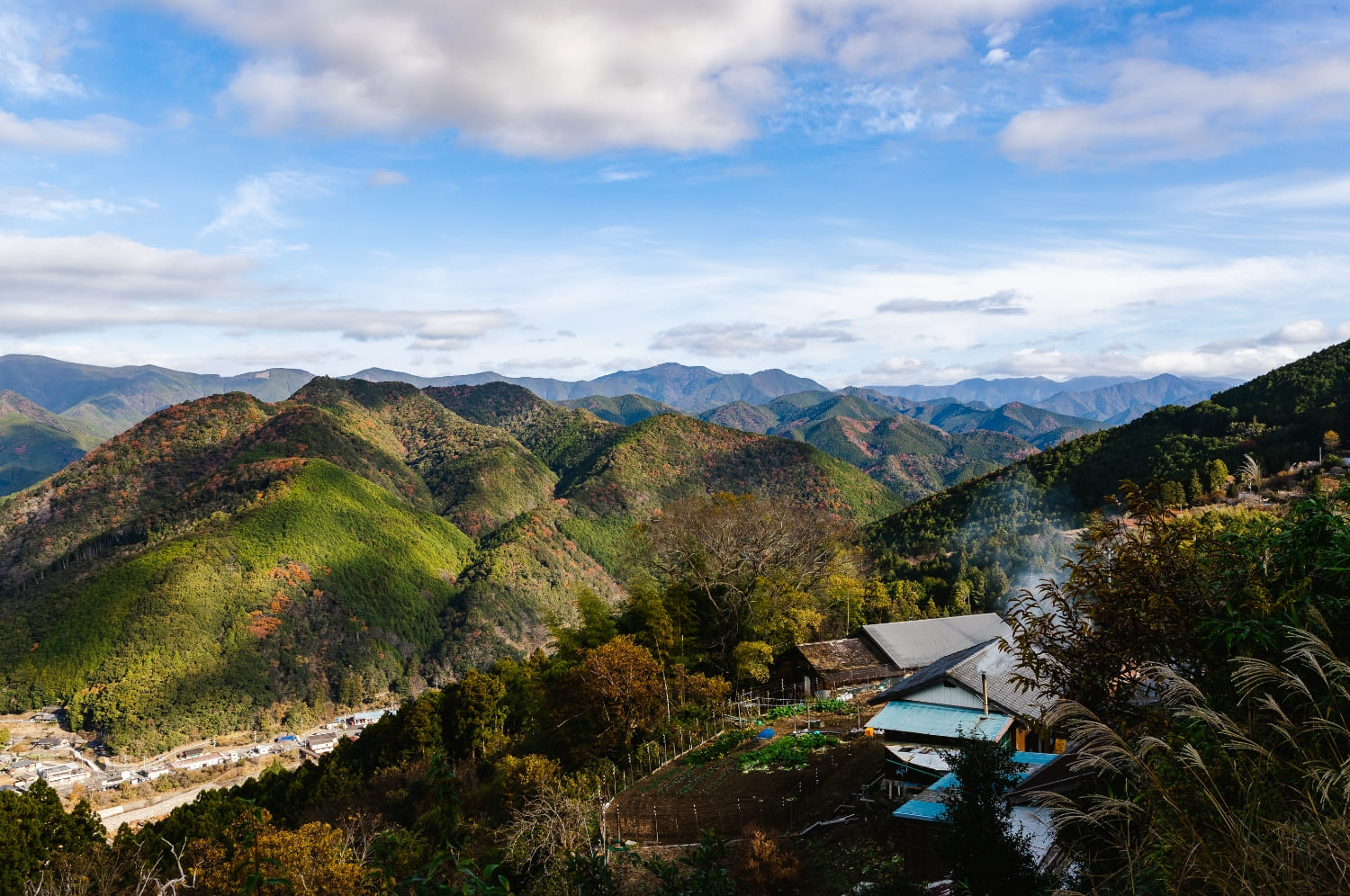
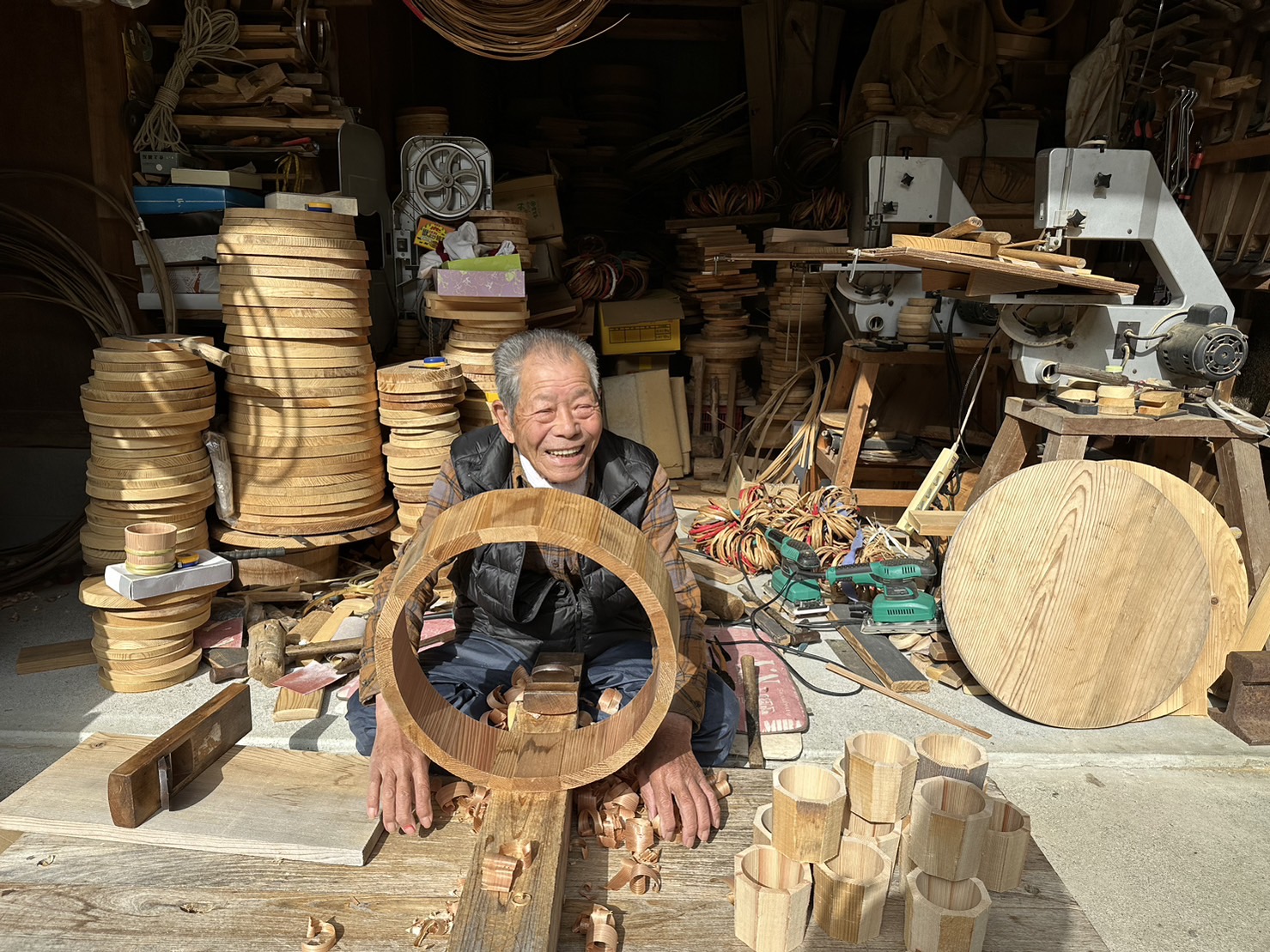
Okehama is an 88-year-old craftsman who handcrafts sauna buckets from 120-year-old Kishu cedar.
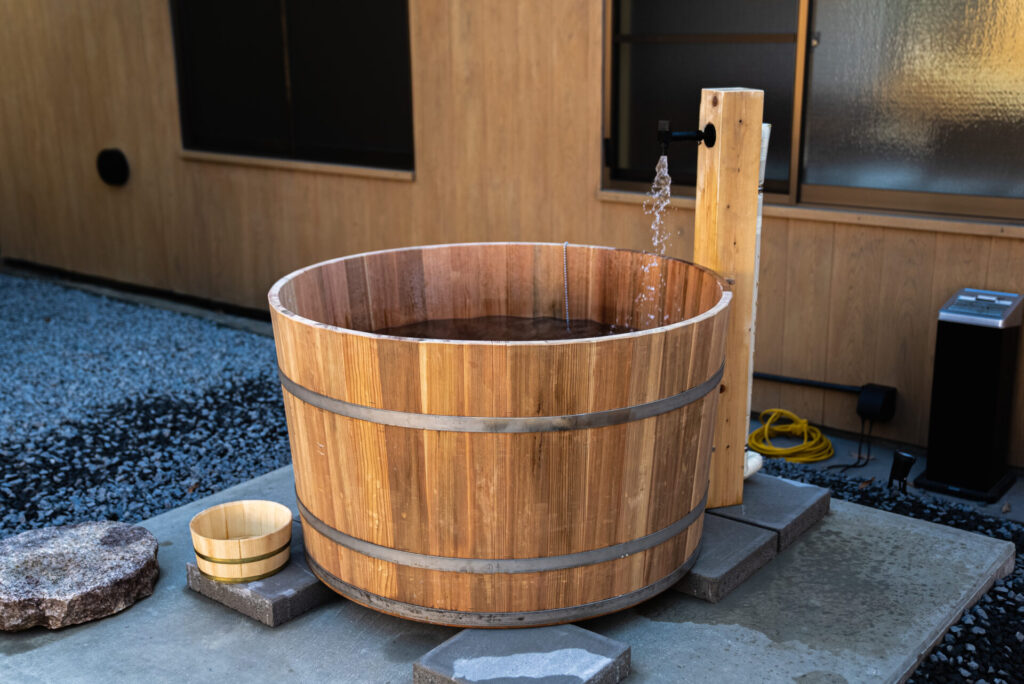
The Kumanoko Sauna at SEN.RETREAT TAKAHARA features a large Kishu cedar tub for a cold-water plunge after your sauna session. The tub was crafted by Okehama, a traditional cooper based in Nonaka, Nakahechi-cho, Tanabe City.
Hamaji Matsumoto, the craftsman behind Okehama, hand-makes each piece and is now 88 years old. Though he once left the trade, he reopened his workshop in his sixties and continues to receive commissions from restaurants and private clients. We spoke with him about his passion and exacting standards, and the secret to staying active at the bench for life.
Crafting a 1-meter tub from 120-year-old Kishu cedar
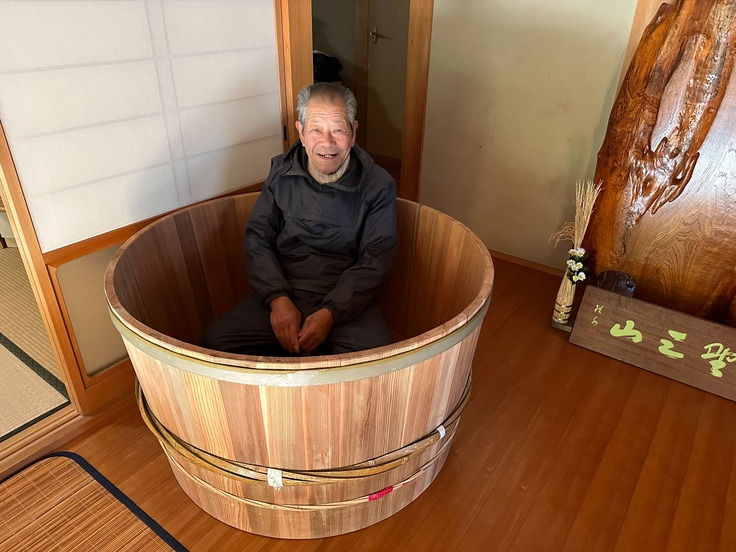
SEN.RETREAT’s cold-plunge tub is made from premium Kishu cedar grown in the mountains of Kumano. Measuring 1 m in diameter and 60 cm deep—large enough for two adults—it’s built from cedar that’s roughly 120 years old. As the cooper explains, older trees have a tighter grain and more forgiving movement, making them ideal for large tubs.
With forest maintenance in decline, mature, high-quality timber is increasingly scarce, but rare cedar was secured specifically for SEN.RETREAT. The build took about ten days: more than a dozen staves were hand-planed to fit with no gaps, then bound within outer hoops to complete the tub.
From sushi tubs and miso barrels to pickle vats—he’s made them all.
Matsumoto became a cooper at 18, not long after the war. He entered a cooperage as a live-in apprentice, crafting tubs and barrels from Kumano-grown cedar and cypress for miso, sushi rice, soy sauce, and more. Riding the postwar economic boom, orders poured in.
By the 1960s, however, the spread of inexpensive plastic caused demand for wooden tubs to collapse. The workshop shut down and the craftsmen went their separate ways. Matsumoto then spent about 20 years working at a sawmill, stepping away from tub-making during that time.
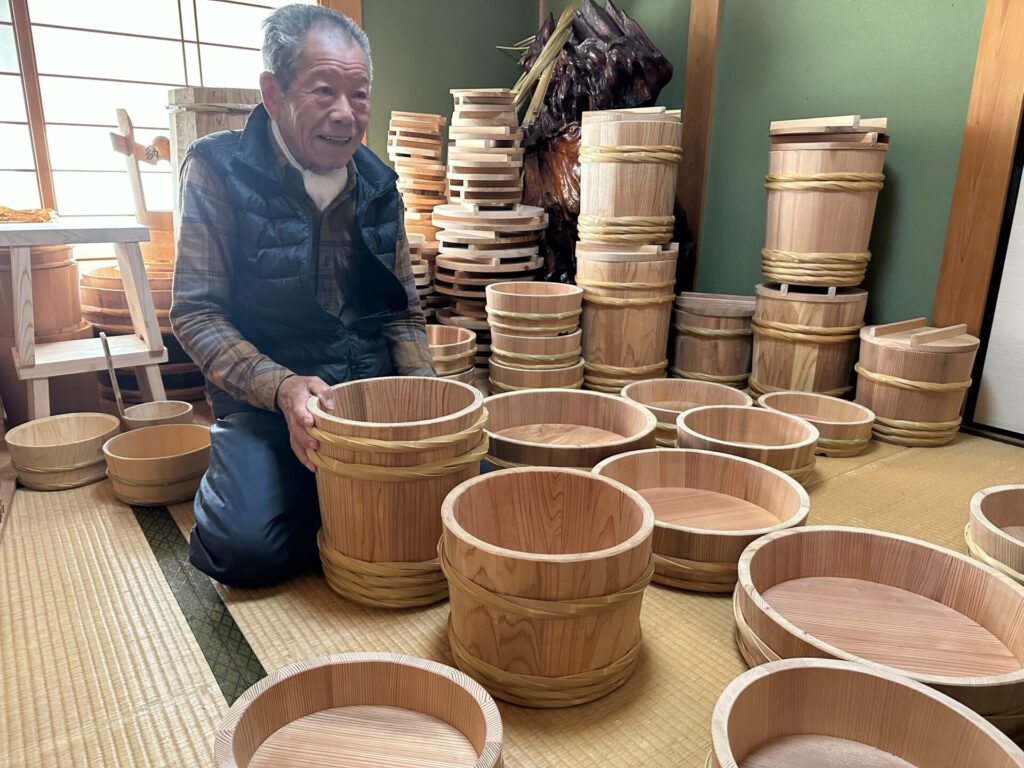
The turning point came after he retired at 60, when a neighbor asked him to repair a tub. Picking up his tools for the first time in years, he did the job—and the client was thrilled with the result.
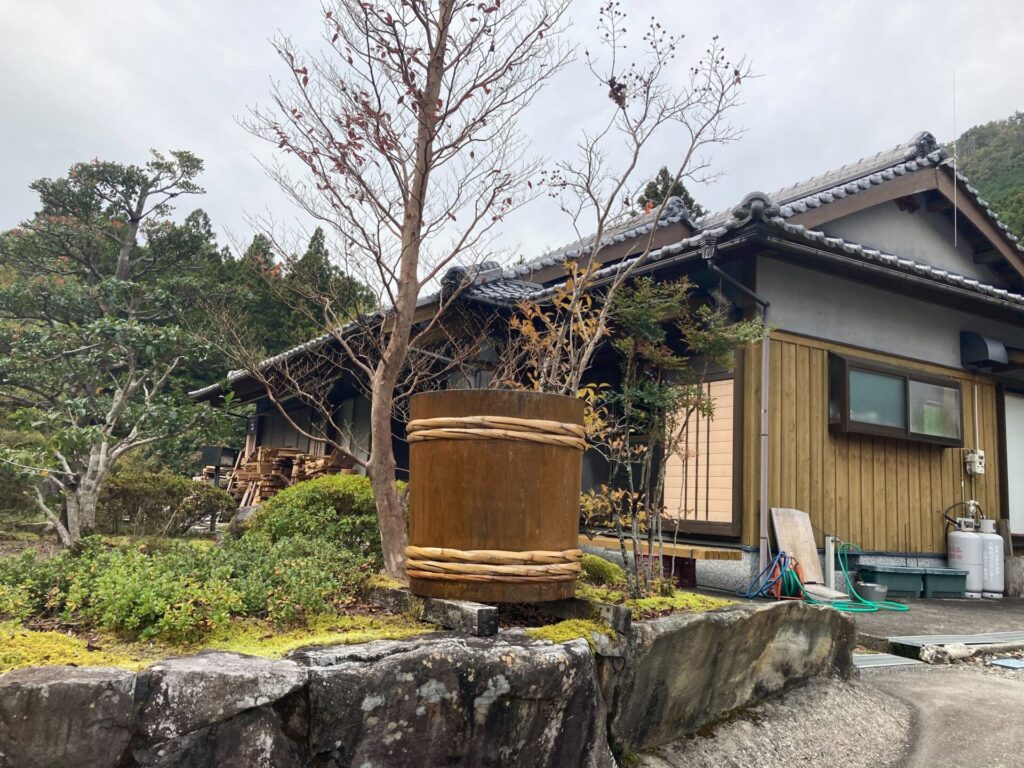
Encouraged by this, he returned to the craft and opened his workshop “Okehama” along National Route 311, so customers could easily stop by. It’s about 2 km from SEN.RETREAT CHIKATSUYU, which also sits on Route 311.
Although demand for wooden tubs waned as times changed, their value is now being rediscovered. Wood absorbs excess moisture and draws out the ingredients’ natural flavors—qualities plastic simply doesn’t offer.
Word of mouth about Matsumoto’s craftsmanship has steadily spread, and there’s still a constant stream of orders.
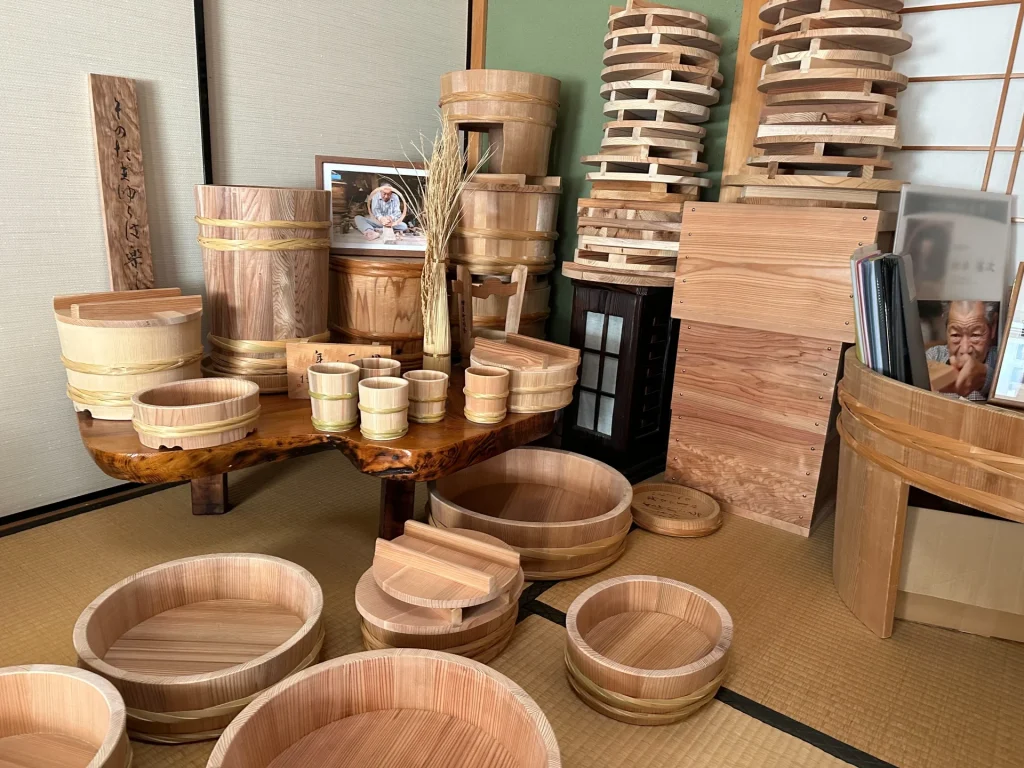
His customers range from restaurants and hotels to temples and shrines, as well as individuals who make miso or pickles at home. Some commissions are modern—wine coolers and beer mugs—while others involve restoring vats stamped two centuries ago. A room in his home, where finished pieces are lined up, is filled with the fresh scent of cedar.
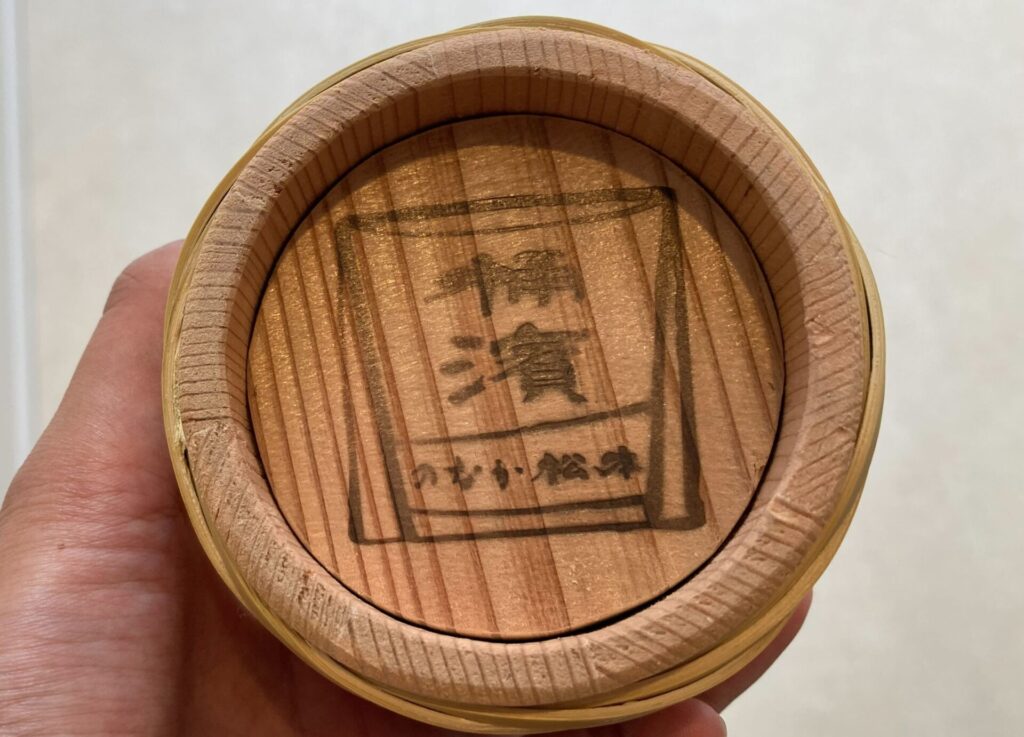
My joy is seeing the people who use my tubs delighted.
Honored as a Wakayama Master Artisan, Mr. Matsumoto has long been recognized for his skill. Now, at 88, he still works every day in his outdoor workshop, through heat and cold alike.
Asked what makes the work rewarding, he answered with a broad smile:
“It’s the best feeling when I hear things like, ‘the rice tastes better thanks to your tub’ or ‘it’s so easy to use—it really helps.’ Recently, a customer who ordered an ohitsu (a wooden rice tub for white rice) sent me a thank-you letter—that made me especially happy. I hope SEN.RETREAT guests enjoy a truly pleasant bath as well.”
Other Articles