Kurosawa Farm is the only farm in the Kinki region that practices year-round mountain grazing.
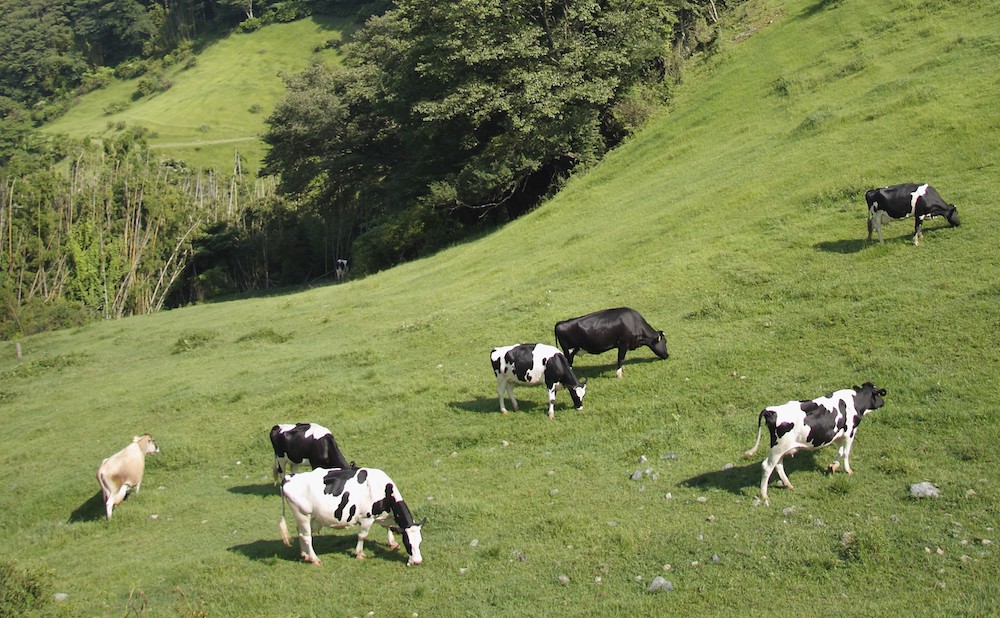
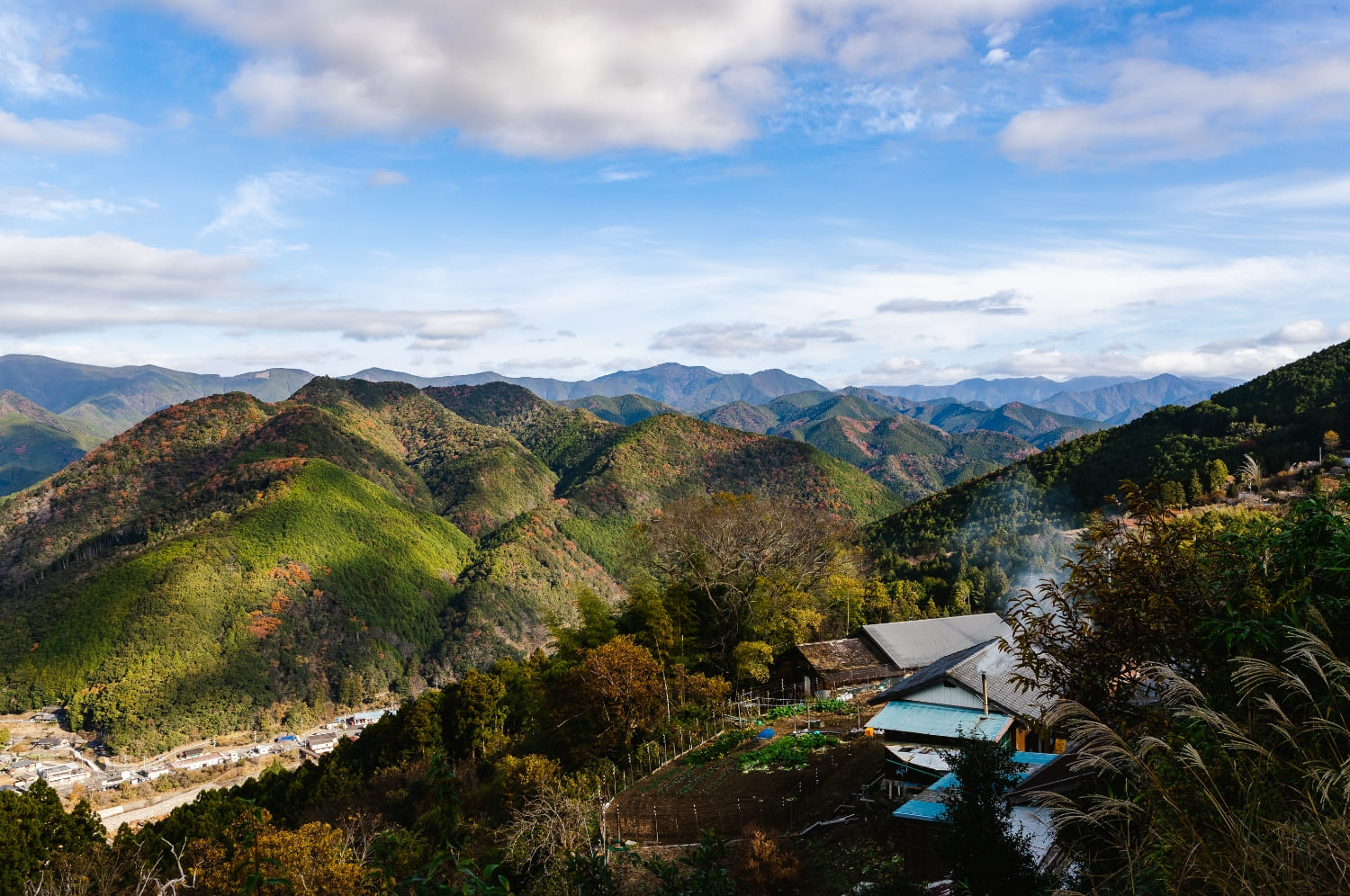
Kurosawa Farm sits atop Mt. Kurosawa at about 509 meters (1,670 ft) above sea level. Watching the cattle amble across roughly 30 hectares (≈74 acres; about six Tokyo Domes) of pasture looks like a scene straight off a milk carton. It’s also the only farm in the Kinki region that practices year-round mountain grazing.
Year-round mountain grazing (Japanese: 山地周年放牧) means raising cattle on mountain pasture throughout the year. While many farms graze on flatland or only seasonally, keeping cattle out on mountain grassland all year is rare even across Japan.
In this article, we explore the secret behind the rich flavor of their craft ice cream and milk pudding—made with plenty of milk from cows raised in this pristine, natural environment.
Back after 20 years! Products made with “Yasashii Milk.”
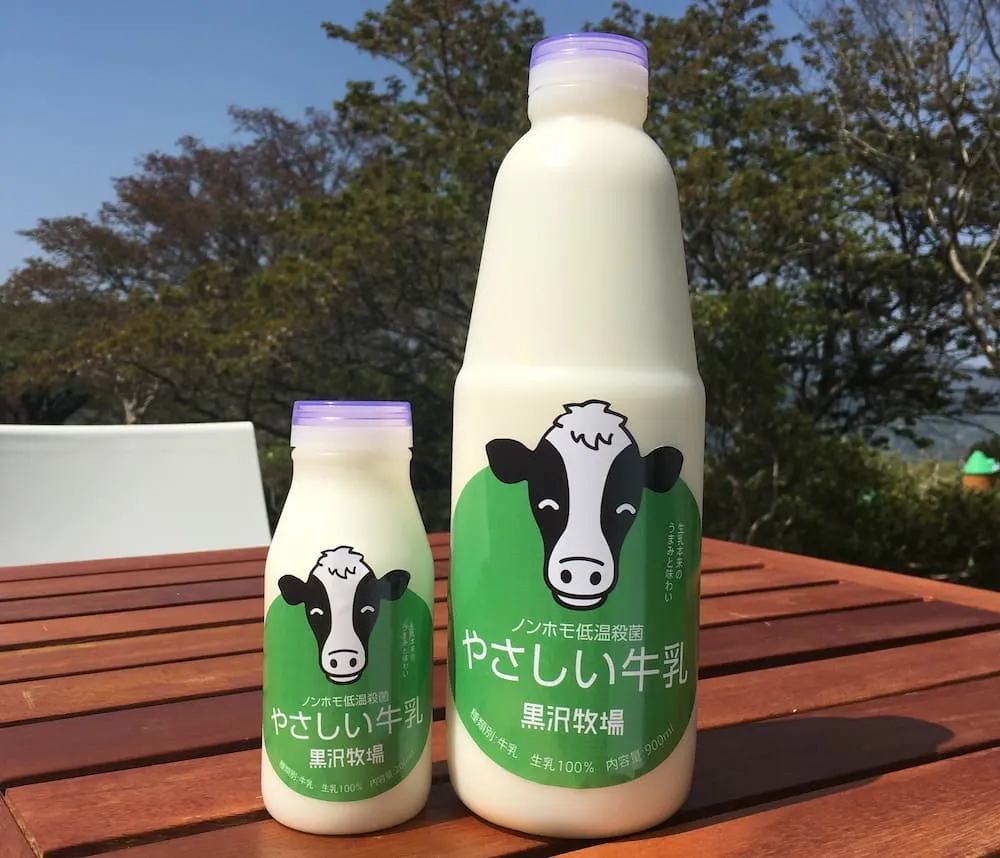
Founded in 1968, Kurosawa Farm once sold pasteurized milk exclusively on-site—in 1.8-liter sake bottles (isshobin). There was no brand name or label; it was a simple, homespun milk.
Sales were halted for a time due to hygiene management concerns, but after many requests to “bring back that old taste,” the milk returned in 2016—its first revival in 20 years. The farm built its own processing facility and dedicated shop on-site and named the product “Yasashii Milk” (literally, “Gentle Milk”).
In 2018, Yasashii Milk received the Jury’s Special Award within the “Premier Wakayama” prefectural brand program, which recognizes outstanding local products.
Cow-Friendly
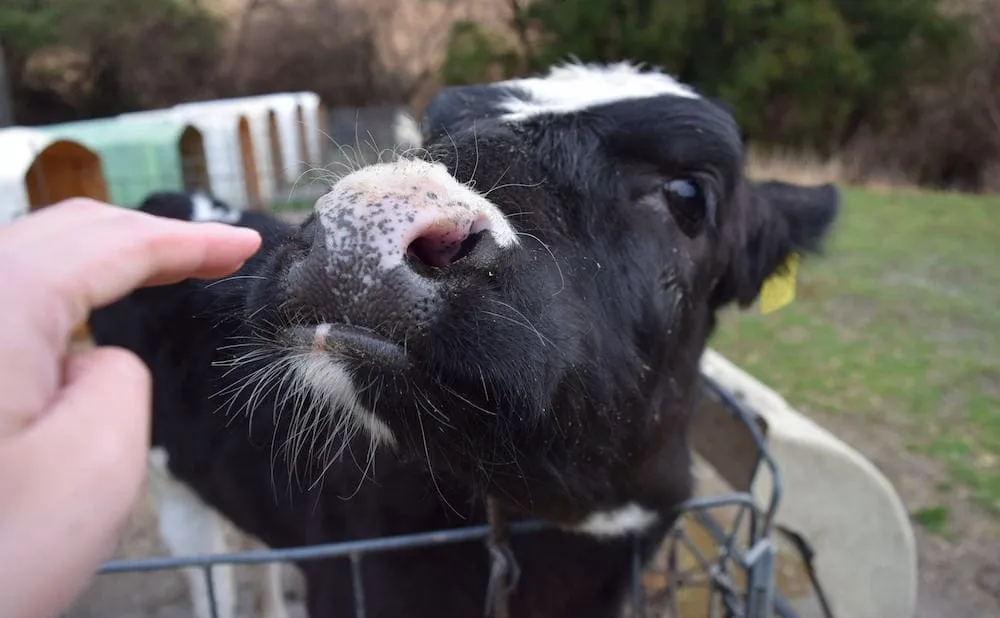
The first “kindness” is being kind to cows. Animal welfare is a concept that has gained traction from Europe: it means respecting animals’ natural needs so they can live healthy, low-stress lives from birth through the end of life.
At Kurosawa Farm, the cattle are out on pasture 24 hours a day—they sleep, wake, and graze whenever they like. Because they walk on mountain terrain, their legs and core stay strong, and calving assistance is rarely needed. Milk from healthy cows is naturally rich and high-quality.
It’s said that each cow needs about 1 hectare of pasture. Today, roughly 30 cows roam freely across the farm’s extensive grasslands.
People-friendly
Have you heard the term “non-homogenized milk”? It often carries a “premium, old-fashioned milk” image. “Non-homogenized” simply means milk that hasn’t been homogenized—but what does homogenization mean?
Fresh milk naturally contains fat globules of various sizes. During transport, agitation can cause the larger globules to merge with smaller ones and a cream layer to rise to the top. Homogenization is a mechanical process that breaks those fat globules into much smaller, uniform particles, helping prevent cream from separating.
Some people prefer non-homogenized milk for its traditional flavor and the visible “cream line.” (Digestive discomfort from milk is more commonly related to lactose intolerance or milk proteins rather than homogenization itself.)
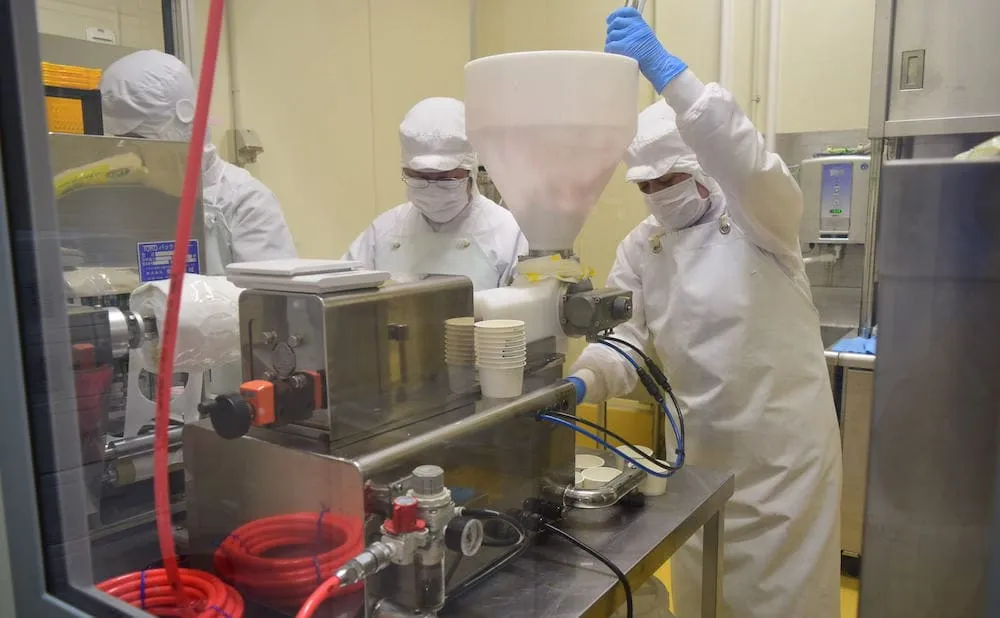
At Kurosawa Farm, our “Yasashii Milk” is processed on-site from freshly collected milk, minimizing transport and preserving its natural taste—a kind choice for people who value freshness and simple processing.
Eco-friendly

Finally, “kind to the environment.” Some point out that cattle manure—even when used for compost—can contribute to emissions if it’s stockpiled in one place and allowed to decompose.
By contrast, when cattle graze freely across wide grasslands, their manure returns to the soil, rain nourishes the earth, and the regrown grass is eaten again. This closed loop is a natural cycle—a more harmonious way for the environment.
At Kurosawa Farm, grass grown on the property is also processed in-house into feed, making efficient use of mountain resources—an eco-friendly practice that reduces waste and transport.
Freshly milked raw milk processed on site
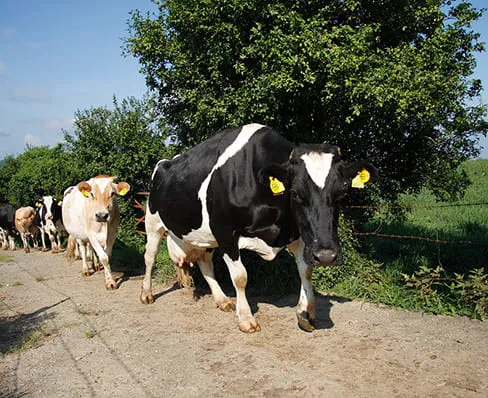
We were given a special chance to watch the milking. Milking takes place every day at 6:00 a.m. and 3:30 p.m. At milking time, the cows line up, walk along the farm lane, and enter the parlor five at a time.
After the udders are cleaned with warm towels, the staff hand-strip a few streams to check the flow. Once the milking units are attached, the milk flows through the lines and collects in the bulk tank.
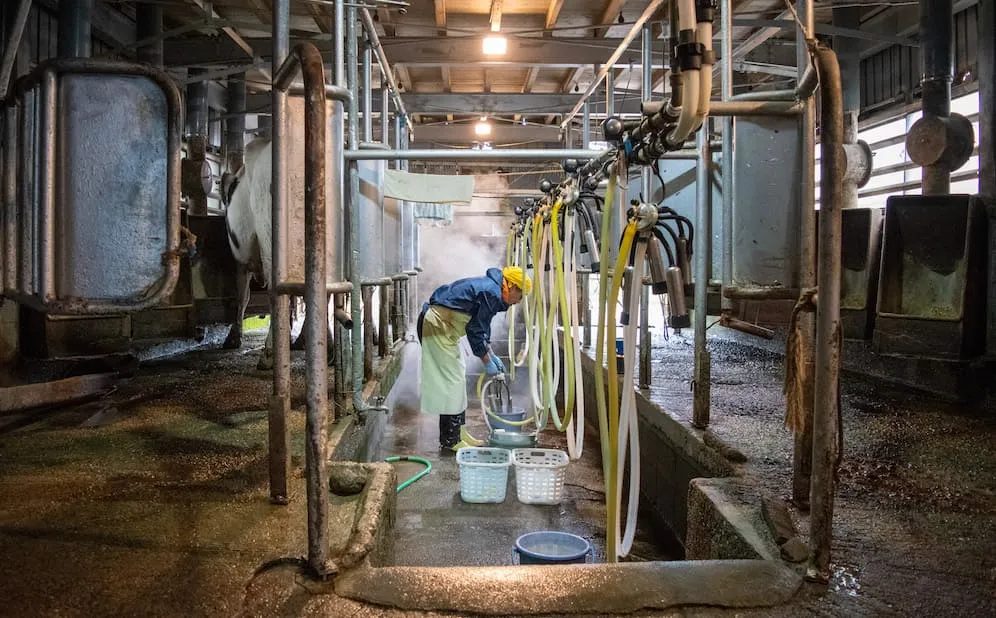
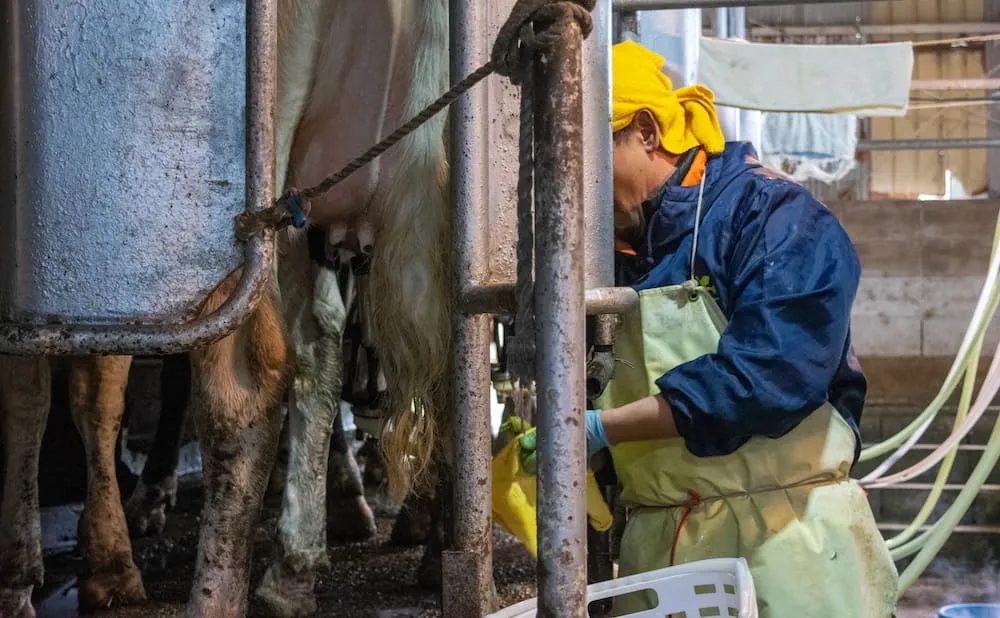
This is the large tank in the milking parlor. From here, the milk is taken to the on-site plant for pasteurization and processing.

Fresh raw milk is gently processed into what we call “Yasashii Milk.” While ordinary milk is often pasteurized at around 120°C for 3 seconds (a very high-temperature, short-time method), Yasashii Milk is heated at 65°C for 30 minutes. Both achieve safe pasteurization, but we take the slower route to preserve the milk’s natural richness and sweetness.
Because milk is mostly water, very high heat drives off moisture and can bring out a cooked, strong dairy smell. By keeping the temperature low—just below the point where noticeable evaporation occurs—we retain milk’s original, full-bodied flavor. Lower temperatures also mean lactose is less likely to break down, which helps the natural sweetness come through.
Highlights: Craft Ice Cream & Milk Pudding
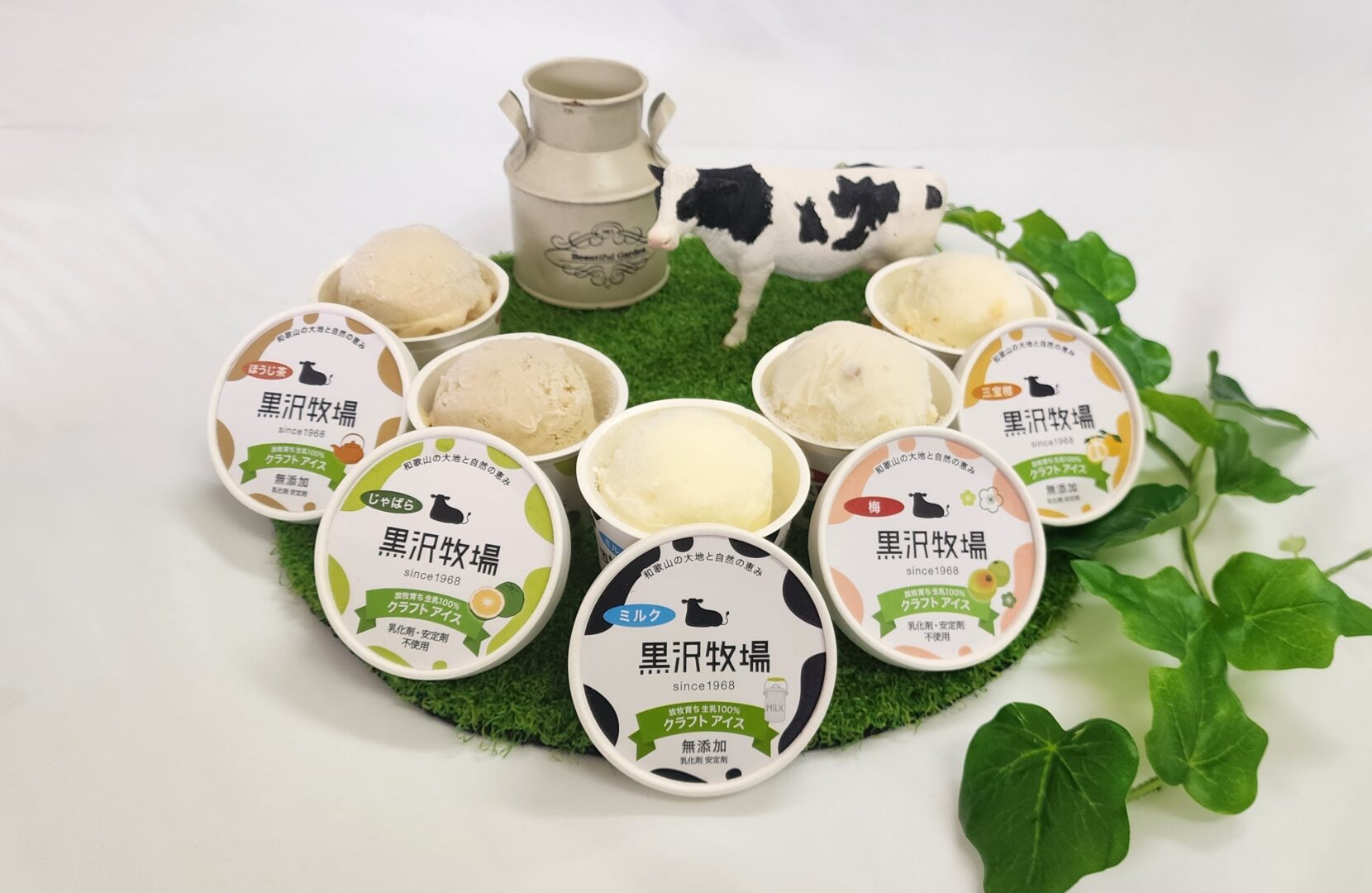
Made generously with our ‘Yasashii Milk’, these craft ice creams and milk puddings let the milk’s natural flavour shine. Dairy desserts are typically heated twice, but at Kurosawa Farm we produce everything on-site, so one gentle heating is enough. That means we can use less sugar while bringing out the milk’s inherent sweetness.
Our craft ice cream is completely additive-free—no emulsifiers, no stabilisers—made with just milk, sugar, and eggs. The taste is refined, gentle, and pleasantly nostalgic.
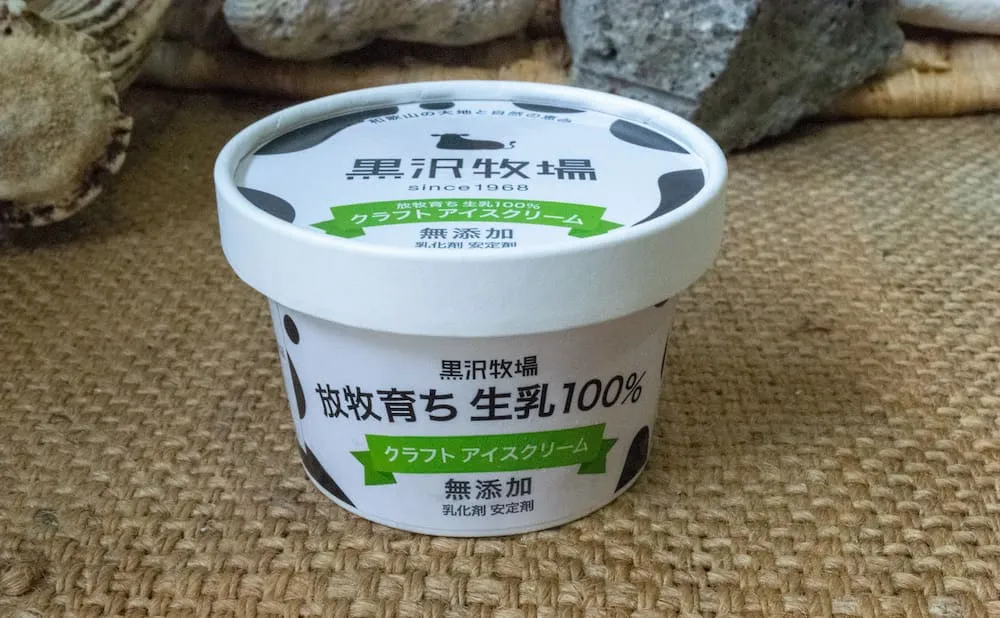
Milk pudding is prized for its pure, milk-white colour, subtle sweetness, and silky texture. It goes down smoothly and finishes clean and refreshing, with a pronounced milkiness that lets you truly taste the milk.

Milk from Kurosawa Farm, produced from pasture-reared cows nourished by the bounty of nature. Our products are made in-house at our on-site creamery from start to finish. As you savour our craft ice cream and milk pudding, spare a thought for the cows roaming the mountain pastures.
Interview & text: Shiori Koyama
Other Articles